By Claire Whitaker
Updated November 2026
Choosing a solar kit for RV trailer use comes down to how much power you actually draw, how much roof space you have, and whether you want a kit that is ready to wire or one that you can expand later. This list compares five complete kits built for trailers, campers, and off-grid use. The selection looks at panel wattage and count, battery capacity, the type of charge controller and inverter included, brand reputation for the components, and the patterns owners tend to report about installation and day-to-day performance. None of these picks were tested by us; the comparison is based on manufacturer specifications and published owner feedback.
Our top picks at a glance
- 1
 TOP CHOICEBest overallRenogy 200W 12V Monocrystalline Solar Panel Kit + 30A PWM Charge ControllerView on Amazon
- 2
 TOP CHOICEBest for small trailersECO-WORTHY 200 Watts 12 Volt/24 Volt Solar Panel KitView on Amazon
- 3
 TOP CHOICEBest for mid-size RVsECO-WORTHY 800W Off Grid Solar System Complete KitView on Amazon
- 4
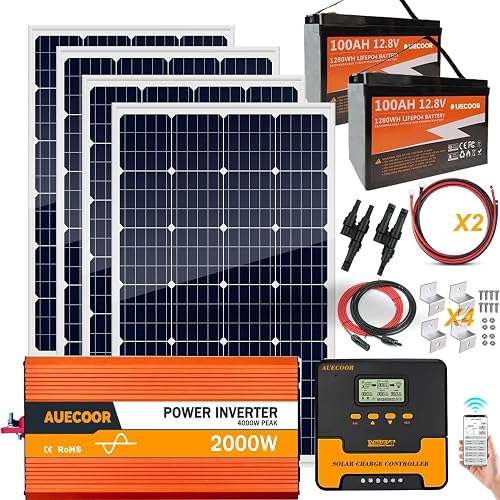 Best for full off-grid living92KWH Complete Solar Panel Kit for RV Off Grid Solar SystemView on Amazon
- 5
 Best budget pickRenogy 200W 12V N-Type RV Solar Panel Kit with Adventurer 30A ControllerView on Amazon
Our Top Picks
Quick Comparison
| Product | Best for | Key feature |
|---|---|---|
| Renogy 200W 12V Monocrystalline Solar Panel Kit + 30A PWM Charge Controller | Weekend campers and first-time installers | Two 100W monocrystalline panels with a 30A PWM controller |
| ECO-WORTHY 200 Watts 12 Volt/24 Volt Solar Panel Kit | Small trailers with limited roof space | Dual-voltage compatibility with a 30A PWM controller |
| ECO-WORTHY 800W Off Grid Solar System Complete Kit | Mid-size RVs that run a fridge and fans | Four bifacial panels with a 2000W pure sine wave inverter |
| 1.92KWH Complete Solar Panel Kit for RV Off Grid Solar System | Full-time off-grid trailer living | Two 100Ah lithium batteries and a 2000W inverter |
| Renogy 200W 12V N-Type RV Solar Panel Kit with Adventurer 30A Controller | Budget-minded upgrades and simple setups | N-type panels paired with an LCD PWM controller |
ECO-WORTHY 800W Off Grid Solar System Complete Kit
4PCS N-Type Bifacial 195W Solar Panel+12.8V 314Ah Lithium Battery+60A MPPT Charge Controller+2000W Pure Sine Wave Inverter ECO-WORTHY 800W Off Grid Solar System Complete Kit for RV Off Grid
Best for: Mid-size RVs and trailers that need to run a small fridge, lights, fans, and occasional small appliances
This kit suits owners who want more capacity than a basic panel kit but do not want to assemble components from several vendors. It is a step up in complexity, so it fits people comfortable running DC wiring and mounting panels on a roof rack or trailer top.
Key specs
- Four N-type bifacial 195W solar panels (listing)
- 12.8V 314Ah lithium battery (listing)
- 60A MPPT charge controller (listing)
- 2000W pure sine wave inverter (listing)
Pros
- MPPT controller generally harvests more energy than PWM in cool or cloudy conditions
- All major components are included, reducing compatibility guesswork
- Pure sine wave output is suitable for most household electronics
Cons
- Heavier than panel-only kits, which affects roof load planning
- Owners often report that the included wiring and connectors need upgrading for long runs
Bottom line: A strong fit for owners of mid-size trailers who want a complete system in one purchase and are ready to handle the installation.
1.92KWH Complete Solar Panel Kit for RV Off Grid Solar System
1.92KWH Complete Solar Panel Kit for RV Off Grid Solar System |2x100Ah 12.8V Batteries 2560WH| 4x120W Mono Rigid Solar Panels |2000W Power Inverter|MPPT Controller|Trailer, Camper, Marine
Best for: Full-time or long-stay off-grid trailer living with higher daily power needs
This is the most capacity-heavy kit on the list. It is designed for people who plan to run appliances for extended periods without hookups, and who need enough battery reserve to ride through cloudy days.
Key specs
- Four 120W monocrystalline rigid panels (listing)
- Two 12.8V 100Ah batteries, 2560Wh total (listing)
- MPPT charge controller (listing)
- 2000W power inverter (listing)
Pros
- Large battery bank provides real overnight and multi-day reserve
- Rigid monocrystalline panels are a common choice for mounted trailer roofs
- Covers both battery and inverter needs in a single package
Cons
- Significant weight and physical size require careful planning for storage and mounting
- Owners often note that total system cost of ownership grows with added batteries or panels later
Bottom line: Best for experienced off-gridders who need sustained power and have the roof space and payload capacity to match.
Renogy 200W 12V Monocrystalline Solar Panel Kit + 30A PWM Charge Controller
200W 12V Monocrystalline solar starter kit with 2Pcs 100W panels & 30A PWM controller for RV, Boats, Camper,Off-Grid System Renogy 200W 12V Monocrystalline Solar Panel Kit + 30A PWM Charge Controller
Best for: Weekend campers and first-time installers who want a simple, well-documented starter setup
This kit is a practical entry point for trailer owners who run lights, phone and laptop charging, a water pump, and a small 12V fan. It pairs two 100W panels with a PWM controller, which keeps the wiring straightforward.
Key specs
- 200W total output from two 100W monocrystalline panels (listing)
- 12V system (listing)
- 30A PWM charge controller (listing)
Pros
- Simple layout that suits first-time installers
- Monocrystalline panels are widely regarded as efficient for their size
- Brand has a broad base of compatible accessories and mounting hardware
Cons
- PWM control is less efficient than MPPT in low-light or hot conditions
- Does not include battery or inverter, so those must be purchased separately
Bottom line: A sensible first kit for trailer owners who want to learn the system and expand over time.
ECO-WORTHY 200 Watts 12 Volt/24 Volt Solar Panel Kit
ECO-WORTHY 200 Watts 12 Volt/24 Volt Solar Panel Kit with High Efficiency Monocrystalline Solar Panel and 30A PWM Charge Controller for RV, Camper, Vehicle, Caravan and Other Off Grid Applications
Best for: Small trailers and teardrop campers with limited roof area
The 200W output and dual 12V/24V compatibility make this kit flexible for smaller rigs. It is a good match for owners who mainly need to keep a battery topped up for lights, a fan, and device charging.
Key specs
- 200W total panel output (listing)
- 12 Volt/24 Volt compatible (listing)
- 30A PWM charge controller (listing)
Pros
- Compact footprint suits small roof surfaces
- Dual-voltage listing gives some system design flexibility
- Includes controller, reducing separate purchases
Cons
- Owners often report that mounting hardware is basic and may need upgrading
- PWM controller limits harvest compared with MPPT designs
Bottom line: Good for owners of small trailers who want modest, reliable daily charging without a large system.
Renogy 200W 12V N-Type RV Solar Panel Kit with Adventurer 30A Controller
Adventurer 30A LCD PWM Charge Controller + Mounting Brackets for RVs, Boats, Trailers, Campers, Marine & Off – Grid Systems Renogy 200W 12V N-Type RV Solar Panel Kit with Adventurer 30A Controller
Best for: Budget-minded upgrades and simple setups where the controller and mounting brackets are the priority
This listing centers on the Adventurer 30A LCD PWM controller and mounting brackets, paired with a 200W N-type panel kit. It suits owners who already have a battery and want a clean, readable controller.
Key specs
- 200W 12V N-type panel kit (listing)
- Adventurer 30A LCD PWM charge controller (listing)
- Mounting brackets included (listing)
Pros
- LCD display makes monitoring charge status straightforward
- Mounting brackets included reduce extra purchases
- N-type panels are generally noted for good low-light performance
Cons
- PWM controller is less efficient than MPPT for larger systems
- Battery and inverter are not part of the kit
Bottom line: A practical choice for owners upgrading an existing trailer battery setup on a limited budget.
Buying Guide
Panel Wattage and Roof Space
Measure your usable roof area before comparing kits. Panels are typically 40 to 60 inches long each, and you need clearance for airflow and walking. Match total wattage to your daily load: a rough rule is to multiply your daily amp-hours by battery voltage and add a margin for weather. Owners often underestimate how much roof they need.
Good picks for this: ECO-WORTHY 200 Watts 12 Volt/24 Volt Solar Panel Kit, Renogy 200W 12V Monocrystalline Solar Panel Kit + 30A PWM Charge Controller For a deeper look, Top 7 Cross Country RV Solar Picks for Every Need covers this in detail.
Charge Controller Type: PWM vs. MPPT
PWM controllers are simpler and less expensive to build into a kit, but MPPT controllers typically extract more energy, especially in cool weather or when panels and battery voltages differ. For small, low-wattage systems PWM is often adequate. As systems grow, MPPT becomes more worthwhile.
Good picks for this: ECO-WORTHY 800W Off Grid Solar System Complete Kit, 1.92KWH Complete Solar Panel Kit for RV Off Grid Solar System
Battery Capacity and Chemistry
Check whether the kit includes a battery. Lithium batteries are lighter and tolerate deeper discharge than traditional lead-acid, while lead-acid is cheaper to replace. Compare usable capacity in watt-hours, not just amp-hours, since voltage matters. Keep in mind that battery charging is a safety-sensitive area; consult a qualified RV technician for wiring a new battery bank.
Good picks for this: 1.92KWH Complete Solar Panel Kit for RV Off Grid Solar System, ECO-WORTHY 800W Off Grid Solar System Complete Kit
Inverter Needs and Output Quality
If you plan to run standard household appliances, you need an inverter with pure sine wave output. Modified sine wave can damage some electronics and cause motors to run hot. Size the inverter above your largest continuous load, and remember that startup surges from compressors can be several times higher than running draw.
Good picks for this: ECO-WORTHY 800W Off Grid Solar System Complete Kit, 1.92KWH Complete Solar Panel Kit for RV Off Grid Solar System
Mounting Method and Roof Load
Rigid panels mount with brackets or adhesive mounts and add permanent weight. Check your trailer’s dry weight and roof load rating before adding panels. Flexible panels are lighter but generally less durable in direct sun over many years. Use sealed penetrations and stainless hardware to reduce leak risk.
Good picks for this: Renogy 200W 12V N-Type RV Solar Panel Kit with Adventurer 30A Controller, ECO-WORTHY 200 Watts 12 Volt/24 Volt Solar Panel Kit
Expandability
Kits that use standard connectors and 12V or 24V architecture make future expansion easier. Before buying, confirm that the controller can handle additional panels and that the battery bank can be enlarged in parallel. A controller rated for a fixed maximum current limits how many panels you can add later.
Good picks for this: Renogy 200W 12V Monocrystalline Solar Panel Kit + 30A PWM Charge Controller, ECO-WORTHY 800W Off Grid Solar System Complete Kit
Weather Performance and Durability
Look for panels with an IP-rated junction box and tempered glass, and check the manufacturer’s stated warranty terms. Owners in hot climates often report that controllers and batteries are more sensitive to heat than panels, so ventilation matters. Clean panels periodically; dust and bird droppings reduce output.
Good picks for this: 1.92KWH Complete Solar Panel Kit for RV Off Grid Solar System, Renogy 200W 12V Monocrystalline Solar Panel Kit + 30A PWM Charge Controller
FAQ
What size solar kit do I need for a small RV trailer?
Start by listing the devices you plan to run and their daily amp-hour use. Lights, a water pump, phone charging, and a small fan often total well under 50 amp-hours per day. A 200W kit with a 12V battery can cover that in good sun, though cloudy days will require more battery capacity.
Can I run a refrigerator on a solar kit for RV trailer use?
Yes, but compressor fridges draw substantial power, especially during startup. Many owners pair a 12V compressor fridge with a kit in the 800W range or larger, plus adequate battery storage. Absorption fridges running on propane are a different consideration. Consult an RV electrical specialist to confirm your fridge’s draw and surge.
Is PWM or MPPT better for a trailer?
For smaller systems with few panels, PWM is usually sufficient and simpler. MPPT is generally preferred for larger arrays and when you want maximum harvest in variable weather. The right choice depends on your panel voltage and total wattage.
Do I need a separate battery with these kits?
Some kits include a battery and inverter, while others are panel-and-controller only. Check the listing before buying. If the battery is not included, match its voltage and chemistry to the controller’s settings.
Can I install a solar kit myself?
Many owners install panel-only kits themselves, especially with clear instructions and basic tools. Battery and inverter wiring involves high current and fire risk, so consult a qualified RV technician or electrician if you are unsure. Follow the manufacturer’s fusing and grounding guidance.
How do I protect the roof when mounting panels?
Use manufacturer-approved brackets, sealed penetrations, and butyl or sealant designed for RV roofs. Recheck seals periodically, especially after long highway trips. Confirm that the roof structure can carry the added load.
How much maintenance does a trailer solar system need?
Routine maintenance is light: clean panels, check wiring connections for corrosion, and inspect mounts after rough travel. Monitor battery voltage and controller readings so you catch problems early.
Conclusion
For most first-time trailer owners, the Renogy 200W 12V Monocrystalline kit offers a clear, manageable starting point. Owners of small trailers with limited roof area will find the ECO-WORTHY 200W kit a practical fit. Mid-size rigs that run a fridge and fans are better served by the ECO-WORTHY 800W complete system. Full-time off-grid trailer living calls for the 1.92KWH kit’s battery capacity. The Renogy N-type kit with the Adventurer controller suits budget-conscious upgrades. Match the kit to your daily load and roof space, and plan for expansion before you buy.
Sources
- Background on solar energy basics, system components, and how panels and batteries work together (energy.gov)
- Research on photovoltaic performance, module efficiency, and system design considerations (nrel.gov)
- Electrical and fire safety guidance relevant to wiring, fusing, and battery installations (nfpa.org)
Before you buy: helpful guides
- Renogy RV Solar Panels: How to Choose and Install the Right Kit
- RV Solar Panels Zamp: How to Choose and Mount a Zamp Kit
- Solar Powered RV Trailer Setup: A Step-by-Step Guide for Beginners
- DIY Solar Panels for RV: A Step-by-Step Guide for Beginners
- Installing Solar Panels RV: A Step-by-Step Guide for Beginners
About Claire Whitaker
Claire Whitaker is part of our editorial team and reviews and edits our small-scale solar guides, checking product details against manufacturer specifications and owner feedback.