 By Claire Whitaker
Updated November 2026
Designing an RV solar system is less about buying panels and more about getting the math right: how many watts you need, how much battery storage keeps the lights on through a cloudy week, and whether your inverter can handle the coffee maker. Many RV owners who try to skip the planning end up with an undersized array or wiring that overheats. The six references below were chosen by reading their listing details, checking author and publisher backgrounds, and looking at the topics each one covers, from load calculations to wire gauge tables. Everything here is a book or guide, not a hardware kit, so you can build the system on paper first.
Our top picks at a glance
- 1
 TOP CHOICEBest overallSolar PV System Design & Calculation WorkbookView on Amazon
- 2
 TOP CHOICEBest for complete beginnersThe DIY Off Grid Solar Power BibleView on Amazon
- 3
 TOP CHOICEBest for 12-volt van and camper buildsMobile Solar Power Made Easy!View on Amazon
- 4
 Best focused RV-only guideSolar Power !: Understanding and Designing Your RV Solar SystemView on Amazon
- 5
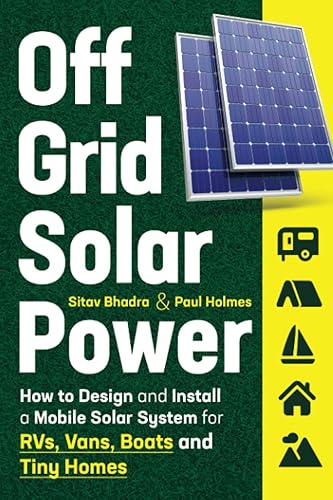 Best for step-by-step installationOff Grid Solar Power: How to Design and Install a Mobile Solar SystemView on Amazon
- 6
 Best general photovoltaic referenceDesign your photovoltaic system Solar Panels 101View on Amazon
Our Top Picks
| Product | Best for | Key feature |
|---|---|---|
| Solar PV System Design & Calculation Workbook | Working through the numbers | Step-by-step sizing formulas for inverters, batteries, wire and arrays |
| The DIY Off Grid Solar Power Bible | Beginners who want the full picture | Covers design, installation and maintenance across several builds |
| Mobile Solar Power Made Easy! | 12-volt van and camper projects | Do-it-yourself instructions for mobile 12-volt systems |
| Solar Power !: Understanding and Designing Your RV Solar System | RV owners wanting an RV-specific reference | Focused entirely on designing an RV solar system |
| Off Grid Solar Power: How to Design and Install a Mobile Solar System | Owners ready to move from plan to install | Covers RVs, vans, boats and tiny homes |
| Design your photovoltaic system Solar Panels 101 | Readers who want general PV theory | Applies to homes, boats, ranches and RVs alike |
Solar PV System Design & Calculation Workbook
Solar PV System Design & Calculation Workbook: Step-by-Step Formulas for Sizing Inverters, Battery Banks, Wire Gauges, and Solar Arrays
Best for: Working through the numbers
This workbook suits RV owners who like to calculate every figure before buying hardware. It is a good fit if you want to check a installer’s sizing or build your own spreadsheet from the formulas inside.
Key specs
- Formula-based sizing for inverters, battery banks, wire gauges and solar arrays
- Step-by-step worked examples
Pros
- Clear formulas you can reuse for any load profile
- Good for checking wire gauge and voltage drop
- Helps you build a load list before shopping
Cons
- Light on photos and installation visuals
- Assumes you are comfortable with basic electrical math
Bottom line: The best pick for owners who want to do the calculations themselves and understand why each component is sized the way it is.
The DIY Off Grid Solar Power Bible
The DIY Off Grid Solar Power Bible: [10 in 1] The Most Complete and Updated Guide to Design, Install, and Maintain Solar Energy Systems for Tiny Homes, Cabins, Rvs, and Boats
Best for: Beginners who want the full picture
This guide covers design, installation and maintenance for tiny homes, cabins, RVs and boats. It suits readers who are new to off-grid power and want one book that walks through the whole process.
Key specs
- Covers design, installation and maintenance in one volume
- Written for tiny homes, cabins, RVs and boats
Pros
- Broad scope for owners new to solar
- Covers maintenance as well as design
- Useful background before reading more technical references
Cons
- Broad coverage means less depth on RV-specific layouts
- Owners report that some sections repeat general solar basics
Bottom line: A strong starting point for someone who wants one book covering the full off-grid process.
Mobile Solar Power Made Easy!
Mobile Solar Power Made Easy!: Mobile 12 volt off grid solar system design and installation. RV's, Vans, Cars and boats! Do-it-yourself step by step instructions.
Best for: 12-volt van and camper builds
This title focuses on mobile 12-volt off-grid systems for RVs, vans, cars and boats. It fits owners with smaller rigs who want step-by-step instructions rather than theory.
Key specs
- Focus on 12-volt mobile off-grid systems
- Do-it-yourself step-by-step instructions
Pros
- Directly relevant to small 12-volt builds
- Practical, instruction-first format
- Covers multiple vehicle types
Cons
- May be too basic for large 24-volt or 48-volt rigs
- Less detail on high-output inverter sizing
Bottom line: The right choice for van and small camper owners planning a 12-volt system from scratch.
Solar Power !: Understanding and Designing Your RV Solar System
Solar Power !: Understanding and Designing Your RV Solar System
Best for: Best focused RV-only guide
This book is aimed squarely at RV owners who want to understand how their own rig should be powered. It suits readers who prefer a single-topic reference over general solar theory.
Key specs
- Dedicated to designing an RV solar system
Pros
- Stays on topic for RV owners
- Explains design decisions in plain language
- Easy to use alongside a specific rig
Cons
- Narrower scope than broader photovoltaic textbooks
- Owners may want more on electrical code details
Bottom line: Ideal for RV owners who want a focused read specifically about their own rig.
Off Grid Solar Power: How to Design and Install a Mobile Solar System
Off Grid Solar Power: How to Design and Install a Mobile Solar System for RVs, Vans, Boats and Tiny Homes (DIY Solar Power)
Best for: Best for step-by-step installation
This guide pairs design with installation for RVs, vans, boats and tiny homes. It suits owners who have finished the planning stage and need help with mounting and wiring.
Key specs
- Covers both design and installation for mobile systems
Pros
- Connects planning to physical install
- Covers several vehicle types
- Practical focus for DIY installers
Cons
- Installation sections may not match every roof layout
- Less depth on advanced battery chemistry
Bottom line: A good match for owners who want design and install guidance in one place.
Design your photovoltaic system Solar Panels 101
Design your photovoltaic system Solar Panels 101 1st Edition: Learn how to install and design your own solar panel system Power your home, business, boat, RV, ranch and some applications.
Best for: Best general photovoltaic reference
This book teaches photovoltaic design principles that apply to homes, boats, ranches and RVs. It fits readers who want to understand the underlying theory before committing to a specific build.
Key specs
- General photovoltaic design and installation principles
Pros
- Useful theory for any PV project
- Applies beyond RVs
- Good foundation for later specialized reading
Cons
- Not specific to RV layouts or 12-volt systems
- Requires adapting examples to a mobile build
Bottom line: Best for readers who want general solar theory and plan to adapt it to an RV themselves.
Buying Guide
Define your daily energy load
Start by listing every device you will run and how many watt-hours each uses per day. Multiply wattage by hours of use, then add a margin for cloudy days. Owners often find that refrigerators, furnaces fans and induction cooktops dominate the total. A good reference will show you how to build this table and convert it into battery and array sizes.
Good picks for this: Solar PV System Design & Calculation Workbook, Solar Power !: Understanding and Designing Your RV Solar System
Choose between 12-volt and higher-voltage architectures
Most small RVs run 12-volt systems, while larger rigs may use 24 or 48 volts to reduce wire size and current. Higher voltage can lower losses over long wire runs. Check whether a book clearly explains the tradeoffs before you commit to one architecture.
Good picks for this: Mobile Solar Power Made Easy!, The DIY Off Grid Solar Power Bible
Check inverter sizing and surge capacity
The inverter must handle your continuous load and the short surge when motors start. Sizing it only for the average load is a common mistake. Look for material that explains surge ratings and how to size the inverter against your largest appliance.
Good picks for this: Off Grid Solar Power: How to Design and Install a Mobile Solar System, Solar PV System Design & Calculation Workbook
Size wire and check voltage drop
Undersized wire causes heat and voltage loss, especially on the run from the array roof to the charge controller. A common target is to keep voltage drop low, often cited around three percent for branch circuits. Verify this against the tables in your reference and your local electrical code.
Good picks for this: Solar PV System Design & Calculation Workbook, Design your photovoltaic system Solar Panels 101
Plan for roof space and mounting
Measure the usable roof area after vents, air conditioners and the satellite dish are accounted for. Panel layout affects wiring, shading and access. A guide that covers real roof layouts for RVs and vans will save you a redesign later.
Good picks for this: Off Grid Solar Power: How to Design and Install a Mobile Solar System, Solar Power !: Understanding and Designing Your RV Solar System
Plan for battery type and care
Battery choice affects usable capacity, charge rates and lifespan. Lead-acid and lithium batteries behave differently with depth of discharge and temperature. Good references explain how to protect your bank and how to maintain it over time.
Good picks for this: The DIY Off Grid Solar Power Bible, Mobile Solar Power Made Easy!
Consider the rig’s use case
Weekend campers, full-timers and boondockers have very different loads and charging opportunities. A system that works for occasional use may fail for daily living. Match the depth of the reference to how seriously you plan to rely on solar.
Good picks for this: Design your photovoltaic system Solar Panels 101, The DIY Off Grid Solar Power Bible
FAQ
How many watts of solar do I need for an RV?
It depends on your daily energy use. Calculate your watt-hours per day, then divide by the peak sun hours where you usually camp to estimate array size. Add margin for cloud cover and efficiency losses. Reference books walk through this calculation in detail.
Is a 12-volt RV solar system enough?
For light loads such as lights, fans, phone charging and a small fridge, a 12-volt system can work well. Heavy loads like air conditioning or electric cooking usually need a larger inverter and higher-capacity battery bank.
Do I need a charge controller?
Yes. A charge controller regulates voltage from the panels to the batteries and protects them from overcharging. Most RV designs include either an MPPT or PWM controller, and the choice affects how much energy you harvest.
Can I design my own RV solar system?
Many owners do, using calculation workbooks and guides like those above. If you are unsure about wiring, fuse sizing or code compliance, consult a qualified electrician or RV solar installer before connecting anything to your rig’s electrical system.
How do I know what size inverter to buy?
Add up the wattage of the devices you might run at the same time, then account for surge from motors and compressors. Size the inverter to handle that peak load comfortably. Check the surge rating against your largest appliance.
Should I use lithium or lead-acid batteries?
Lithium batteries typically offer more usable capacity and longer cycle life, while lead-acid batteries cost less up front and are widely available. Your choice should reflect your budget, weight limits and how often you will cycle the bank. Guides often compare both chemistries.
Conclusion
For most RV owners, the best starting point is a calculation-focused reference paired with a broader guide. The Solar PV System Design & Calculation Workbook suits anyone who wants to work through the numbers. The DIY Off Grid Solar Power Bible and Off Grid Solar Power: How to Design and Install a Mobile Solar System work well for readers moving from planning to installation. Owners with smaller 12-volt rigs may prefer Mobile Solar Power Made Easy!, while those focused on RVs specifically will find Solar Power !: Understanding and Designing Your RV Solar System most directly relevant. Design your photovoltaic system Solar Panels 101 provides the general theory behind all of them. Because wiring and electrical code vary by location, consult a qualified electrician before making changes to your rig.
Sources
- Federal guidance on solar energy basics, system components and how renewable systems are typically designed (energy.gov)
- Electrical safety standards, including the National Electrical Code that governs wiring and overcurrent protection (nfpa.org)
- Research on solar resource data and system performance that informs sizing assumptions (nrel.gov)
Before you buy: helpful guides
- RV Solar Systems Installed: A Step-by-Step Guide for Beginners (2026)
- RV Solar System Installation: A Step-by-Step Guide for Beginners
- Rv Solar Charging System: How to Size and Install One Step by Step
- Bluetti RV Solar 48V System: Step-by-Step Setup for Small Rigs
- 30 Amp RV Solar System: A Step-by-Step Guide for Beginners
Related reading
- Top 6 RV Solar Power System Picks for Every Need (2026)
- Top 6 Solar Systems for RV Picks for Every Need (2026)
- Top 6 Best Lithium Batteries for RV Solar System Picks for Every Need
About Claire Whitaker
Claire Whitaker is part of our editorial team and reviews and edits our small-scale solar guides, checking product details against manufacturer specifications and owner feedback.