 By Claire Whitaker
Updated November 2026
Choosing the best lithium battery for RV solar system use comes down to usable capacity, a built-in battery management system (BMS), low-temperature protection, and how many charge cycles the cell is rated for. This list compares six LiFePO4 options that owners commonly pair with RV solar kits, grouped by the need each one fits best.
Our top picks at a glance
- 1
 TOP CHOICEBest overall12V 100Ah LiFePO4 Solar BatteryView on Amazon
- 2
 TOP CHOICEBest for larger off-grid banksECO-WORTHY 12V 314AH LiFePO4 Lithium Battery BluetoothView on Amazon
- 3
 TOP CHOICEBest for expandable setupsMini Lithium Battery 12V 340Ah 2-PackView on Amazon
- 4
 Best starter kitECO-WORTHY 200 Watt 12V Complete Solar Panel Starter KitView on Amazon
- 5
 Best for cold-weather useDyness 12V 100Ah LiFePO4 Lithium Battery (2 Pack)View on Amazon
- 6
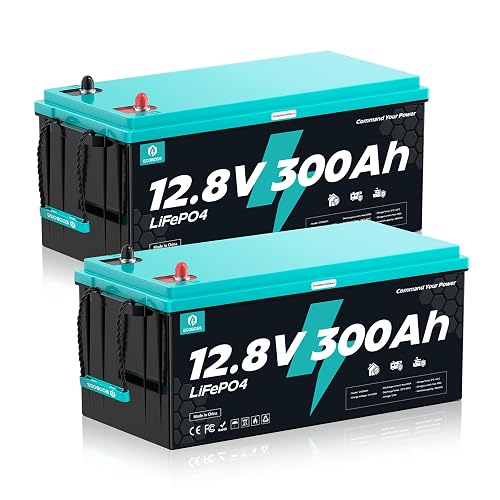 Best for high-capacity storage2Packs 12V 300Ah LiFePO4 Deep Cycle Lithium BatteryView on Amazon
Our Top Picks
Quick Comparison
| Product | Best for | Key feature |
|---|---|---|
| 12V 100Ah LiFePO4 Solar Battery | Overall balance | 15000+ cycles rated |
| ECO-WORTHY 12V 314AH LiFePO4 | Larger off-grid banks | Bluetooth and SOC LEDs |
| Mini Lithium Battery 12V 340Ah 2-Pack | Expandable setups | Supports 4P4S connection |
| ECO-WORTHY 200W Starter Kit | Simple first install | Panels, controller, inverter included |
| Dyness 12V 100Ah LiFePO4 (2 Pack) | Cold-weather use | Low-temp protection |
| 2Packs 12V 300Ah LiFePO4 | High-capacity storage | 3840Wh per set |
12V 100Ah LiFePO4 Solar Battery
12V 100Ah LiFePO4 Solar Battery – Deep Cycle Lithium Battery for Solar Systems, Off-Grid, RV, Marine, and Backup Power with 15000+ Cycles, Lightweight, Maintenance-Free
Best for: Overall balance
A solid all-round choice for RV owners adding their first lithium bank without oversizing the system. Its size keeps weight manageable for most rigs.
Pros
- Rated for 15000+ cycles
- Lightweight and maintenance-free
Cons
- Single battery offers limited runtime for heavy loads
ECO-WORTHY 12V 314AH LiFePO4 Lithium Battery Bluetooth
ECO-WORTHY 12V 314AH LiFePO4 Lithium Battery Bluetooth with SOC LEDs, Low Temp Protection, 4019WH, 200A BMS Up to 15000 Deep Cycle for Off-Grid, RV, Solar Power System, HomeBackup
Best for: Larger off-grid banks
Suits owners who run air conditioning-free loads for multiple days and want to monitor state of charge from a phone.
Pros
- Bluetooth monitoring and SOC LEDs
- 200A BMS with low-temperature protection
Cons
- Heavier than smaller 12V units
Mini Lithium Battery 12V 340Ah 2-Pack
Built-in 200A BMS,10 Year Lifespan,Supports 4P4S Connection Up to 69.63kWh 12V 340Ah Mini Lithium Battery, for RV,Solar System,Off-Grid 2-Pack
Best for: Expandable setups
Fits owners who plan to grow capacity over time, since the listing specifies connection options for building larger banks.
Pros
- Built-in 200A BMS
- Manufacturer specifies up to 10-year lifespan
Cons
- Wiring for multi-pack banks requires careful planning
ECO-WORTHY 200 Watt 12V Complete Solar Panel Starter Kit
ECO-WORTHYwith Battery and Inverter: 2*100W Solar Panel + 30A Charge Controller + 100Ah Lithium Battery + 1100W Premium Solar Inverter 200 Watt 12V Complete Solar Panel Starter Kit for RV Off Grid
Best for: Simple first install
A bundled option for newcomers who want panels, a charge controller, a 100Ah lithium battery, and an inverter in one purchase.
Pros
- Includes battery, controller, and inverter
- Designed for off-grid RV use
Cons
- Panel output is modest for large appliances
Dyness 12V 100Ah LiFePO4 Lithium Battery (2 Pack)
Dyness 12V 100Ah LiFePO4 Lithium Battery (2 Pack) BCI Group 31 with Low-Temp Protection, A+ Grade Cell Built-in 100A BMS, 12 Volt Lithium Battery Perfect for RV, Solar System, Off-Grid, Home Energy
Best for: Cold-weather use
Useful for owners camping in shoulder seasons, where low-temperature cutoff protection matters most.
Pros
- Low-temp protection built in
- Built-in 100A BMS
Cons
- Lower current limit than 200A-rated options
2Packs 12V 300Ah LiFePO4 Deep Cycle Lithium Battery
2Packs 12V 300Ah LiFePO4 Battery, 3840Wh Deep Cycle Lithium Battery, 200A BMS, 15000+ Cycles, Low-Temp Cutoff Protection, Lithium Battery for Solar, RV, Marine, Off Grid
Best for: High-capacity storage
Aimed at full-time RVers and off-grid users who need several kilowatt-hours of storage for refrigeration, electronics, and extended cloudy stretches.
Pros
- Listed at 3840Wh per set
- 200A BMS and low-temp cutoff
Cons
- Significant weight and space requirements
Buying Guide
Usable capacity and amp-hours
Check the amp-hour rating and the watt-hour figure together, since they show how much energy the battery actually stores. Plan for the amount you will draw per day, not the maximum you could theoretically pull.
FAQ
Why choose LiFePO4 over other lithium chemistries for an RV solar system?
LiFePO4 (lithium iron phosphate) cells are known for stable chemistry, good thermal behavior, and long cycle life, which suits the daily charge and discharge pattern of an RV solar setup. They also tolerate partial state-of-charge operation well, so you do not need to run them down to empty to get useful service.
What does a built-in BMS do for my RV battery?
The battery management system monitors cell voltage, current, and temperature, and it disconnects the battery if a fault condition such as overcharge, over-discharge, or a short circuit appears. Many batteries in this list include a 100A or 200A BMS, which helps protect the battery and your RV’s wiring. Always confirm the BMS rating matches the current your inverter and loads will draw.
Do lithium batteries need special handling in cold weather?
Yes. Charging a LiFePO4 battery below freezing can cause permanent damage, so models with low-temperature protection will block charging when the cell temperature is too low. If you camp in cold climates, look for this feature or plan to keep the battery in a heated compartment.
How do I know if a battery’s rated cycle count is realistic?
Cycle ratings are usually measured under controlled lab conditions at a specific depth of discharge and temperature, so real-world life will vary. Treat the rating as a comparison point between models rather than a guarantee. Staying within the recommended depth of discharge and avoiding extreme temperatures will help you get closer to the rated life.
Can I connect multiple batteries together to add capacity?
Many of these batteries can be wired in parallel to increase amp-hours, and some support series or 4P4S-style configurations for larger systems. Check the manufacturer’s guidance on the maximum number of units and use matching batteries of the same model and age. Ensure your charge controller and inverter can handle the total system current.
Will my existing RV charging system work with a lithium battery?
Not always. Many RV converters and older solar charge controllers are set for lead-acid charge profiles, so they may not fully charge or may overcharge a lithium battery. Confirm that your charge controller has a lithium or LiFePO4 setting, or consider an adjustable controller before you install the new battery.
Conclusion
If you want a straightforward, maintenance-free battery for a modest RV solar build, the single 100Ah options are a practical starting point, while the larger 300Ah and 314Ah models suit owners who run more appliances and want more stored energy. Buyers who want an all-in-one setup should look at the complete starter kit or the battery-and-inverter bundle, and those planning to expand over time may prefer a battery with strong parallel-connection support.
Before you buy, match the battery’s capacity and BMS current rating to your actual daily loads, and confirm that your charge controller supports lithium charging. Choosing the right pairing now will make your RV solar system safer, more efficient, and easier to grow later.
Related reading
- Top 6 Solar Systems for RV Picks for Every Need (2026)
- Top 6 RV Solar Power System Picks for Every Need (2026)
- Solar for RV Battery: 3 Best Picks for Every Need (2026)
- Solar Panels for Charging RV Batteries: 5 Best Kits for Campers (2026)
- Lithium-ion Battery Rv Solar (2026): Which Should You Choose?
- 7 Best Solar Powers for an RV Kits and Systems of 2026
- 7 Best RV Solar Panel Battery Options for Off-Grid Camping (2026)
- 6 Best Solar Power Battery Chargers for RV Setups in 2026
About Claire Whitaker
Claire Whitaker is part of our editorial team and reviews and edits our small-scale solar guides, checking product details against manufacturer specifications and owner feedback.