 By Miles Sinclair
Updated November 2026
Choosing a small solar panel controller comes down to three things: voltage compatibility (12V or 24V), the amperage rating you need, and whether the features match how you plan to use the system. This list compares six widely sold PWM charge controllers on those criteria, plus load outputs, display type and mounting fit. Each pick is based on product listings, brand reputation and common owner feedback patterns, not on bench testing.
Our top picks at a glance
- 1
 TOP CHOICEBest overallACEIRMC 2pcs 30A Solar Charge Controller 12V/24V Intelligent RegulatorView on Amazon
- 2
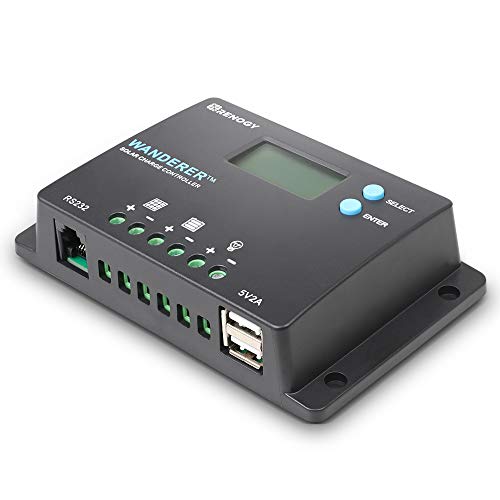 TOP CHOICEBest for RVs and campersRenogy Wanderer 10A PWM Solar Charge Controller 12/24VView on Amazon
- 3
 TOP CHOICEBest for boats and marine useSOLPERK 10A Solar Panel Controller Waterproof 12V/24VView on Amazon
- 4
 Best for timed loads12V/24V Solar Panel Regulator with Dual USB Port and TimerView on Amazon
- 5
 Best for USB chargingPWM Auto Parameter Adjustable Solar Charge Controller 12V/24VView on Amazon
- 6
 Best for higher-current arrays30A PWM Solar Charge Controller 12V 24V Dual USB with LCDView on Amazon
Our Top Picks
Quick Comparison
| Product | Best for | Key feature |
|---|---|---|
| ACEIRMC 2pcs 30A Solar Charge Controller | Best overall | Two units, 30A, timer |
| Renogy Wanderer 10A PWM Solar Charge Controller | RVs and campers | Battery type selection |
| SOLPERK 10A Solar Charge Controller | Boats and marine use | Waterproof housing |
| 12V/24V Solar Panel Regulator with Dual USB Port | Timed loads | Adjustable timer settings |
| PWM Auto Parameter Adjustable Solar Charge Controller | USB charging | Dual USB and LCD |
| 30A PWM Solar Charge Controller with Dual USB | Higher-current arrays | Multiple load modes |
ACEIRMC 2pcs 30A Solar Charge Controller 12V/24V Intelligent Regulator
ACEIRMC 2pcs 30A Solar Charge Controller 12V/ 24V Solar Panel Charge Controller Intelligent Regulator with 5V Dual USB Port Display Adjustable Parameter LCD Display and Timer Setting ON/Off Hours
Best for: Overall value across 12V and 24V systems with room to expand.
This suits owners running a small off-grid shed, cabin or garden system who want a controller with a 5V USB output and an LCD for monitoring.
Pros
- Dual USB port for phone and device charging
- Adjustable parameters and ON/OFF timer
Cons
- Two-pack setup may be more than a single small array needs
Renogy Wanderer 10A PWM Solar Charge Controller 12/24V
Renogy Wanderer 10A PWM Solar Charge Controller 12/24V for Solar Panels | 50V PV input, AGM/Gel/Flooded (auto), Li (manual), LCD, overcharge/ short protection, negative ground, temp comp, for RVs
Best for: RVs, vans and campers that use lead-acid or lithium batteries.
Owners who want a well-known brand and a controller that handles several battery chemistries will find this one a practical fit.
Pros
- Manual setting for lithium batteries plus automatic lead-acid modes
- Overcharge and short-circuit protection
Cons
- 10A rating limits how large an array it can handle
SOLPERK 10A Solar Panel Controller Waterproof 12V/24V
SOLPERK 10A Solar Charge Controller Waterproof Solar Panel Controller 12V/24V PWM Solar Panel Battery Intelligent Regulator for RV Boat car ,with LED Display
Best for: Boats, RVs and outdoor installations exposed to moisture.
This suits people mounting a controller somewhere damp, where a sealed housing and an LED display matter more than extra features.
Pros
- Waterproof housing for marine and outdoor mounting
- Simple LED display for quick status checks
Cons
- Fewer adjustable settings than LCD models
12V/24V Solar Panel Regulator with Dual USB Port and Timer
12V/ 24V Solar Panel Regulator with Dual USB Port Adjustable Timer Setting [Upgraded] 30A PWM Solar Charge Controller with Auto Parameter LCD Display
Best for: Users who want loads to switch on and off on a schedule.
It fits garden lighting, pumps or small fans that should run only at certain hours rather than all day. Worth reading next: 6 Best Solar Panels for Small Boat: Top Picks Compared (2026).
Pros
- Adjustable timer settings for scheduled loads
- Dual USB port with LCD display
Cons
- Timer setup takes some reading of the manual
PWM Auto Parameter Adjustable Solar Charge Controller 12V/24V
PWM Auto Parameter Adjustable, Multiple Load Control Modes, Dual USB Port with LCD Display, Timer Setting 30A Solar Charge Controller 12V/24V Solar Panel Intelligent Regulator
Best for: Charging phones and small devices directly from a small panel.
Owners with a compact system who mostly charge USB gear will appreciate the multiple load control modes.
Pros
- Multiple load control modes
- Dual USB output with LCD display
Cons
- Lower load capacity than the 30A models
30A PWM Solar Charge Controller 12V 24V Dual USB with LCD
30A PWM Solar Charge Controller, 12V 24V Dual USB Solar Panel Battery Intelligent Regulator with LCD Display, Auto Parameter Adjustable, Timer Setting, Multiple Load Control Modes
Best for: Larger small arrays that need more current headroom.
This suits builders connecting a bigger panel to a 12V or 24V battery bank who still want USB charging and timer control.
Pros
- 30A rating for larger small arrays
- Timer setting and multiple load control modes
Cons
- Oversized for very small panels under about 100W
Buying Guide
Voltage Compatibility (12V vs. 24V)
Match the controller to your battery bank voltage first. Most of the controllers in this roundup support both 12V and 24V systems with automatic detection, but confirm that your battery and panel array setup fits the voltage range before buying.
Check the maximum PV input voltage as well, since a panel array wired in series can exceed what a small controller will accept.
Amperage Rating and Sizing
The amp rating should cover the maximum current your solar panels can produce. A 10A controller suits small single-panel setups, while a 30A unit leaves room for larger arrays or future expansion.
Consider your total panel wattage divided by system voltage to estimate current, and choose a controller with some headroom above that figure.
Battery Type Support
Different batteries need different charging profiles. Flooded, AGM and gel batteries are often handled by automatic settings, while lithium batteries may require manual parameter adjustment. Make sure the controller lists the chemistry you plan to use.
Load Outputs, Displays and Extra Features
If you plan to power lights, fans or small devices directly from the controller, look for load control modes and timer settings. An LCD or LED display makes it easier to monitor battery voltage and charging status at a glance.
Built-in USB ports are convenient for phones and small electronics, but they are secondary to the core charging function, so weigh them against your actual needs.
Mounting, Environment and Protection Features
Think about where the controller will live. Boats, vehicles and outdoor sheds call for better moisture resistance and secure mounting, while indoor setups have fewer demands. Protection features such as overcharge, short-circuit and reverse-polarity protection are worth checking on any model you consider.
FAQ
What is a PWM solar charge controller?
A PWM (pulse width modulation) controller regulates the charge flowing from your solar panels into your battery by switching the current on and off. It is a simple, widely used technology that suits small systems well. It works best when the panel voltage closely matches the battery voltage.
Can I use a 30A controller with a small panel?
Yes, a higher-rated controller will work with a smaller panel, since it simply has more capacity than the system needs. The only tradeoff is a slightly higher cost and size. It is a sensible choice if you expect to add panels later.
Do I need a controller if my panel has a built-in regulator?
Most small panels do not include regulation, so a separate controller is usually needed to protect the battery from overcharging. Check your panel’s specifications to confirm whether charge regulation is already built in. If it is not, a controller is essential for battery safety.
Are these controllers suitable for lithium batteries?
Some models support lithium batteries through manual parameter settings, while others are designed mainly for lead-acid types. Always confirm that the controller lists lithium compatibility and set the correct charging voltages for your specific battery. Incorrect settings can damage lithium cells.
How do I know which amp rating I need?
Divide your total solar panel wattage by your system voltage to estimate the maximum current. Choose a controller rated above that number to allow a safety margin. Adding some headroom helps the controller run cooler and last longer. You may also like 6 Best Small Solar Panels for Project Price Picks for DIY Builds (2026).
Conclusion
For most small projects with a single battery and a modest panel array, a 10A or 30A PWM controller with clear battery-type support will cover the basics. Choose a higher-amp model if you expect to expand your system, and pick one with a display and load outputs if you want to monitor or power devices directly.
Buyers with RVs, boats or outdoor setups should prioritize protection features and moisture resistance, while those on tighter budgets can focus on voltage and amperage matching to keep the choice simple.
Related reading
- How a Small Solar Setup Works: Panel, Controller, Battery, Inverter
- Where Can I Buy a Small Solar Panel? 5 Places to Check First
- What Is the Cost of Small Solar Panel Systems? A Beginner's Guide (2026)
- What Is a Very Small Solar Panel Good For? Uses, Limits and Picks
- What Can a Small Solar Panel Power? A Practical Guide for Beginners
About Miles Sinclair
Miles Sinclair is part of our editorial team and reviews and edits our small-scale solar guides, checking product details against manufacturer specifications and owner feedback.