By Claire Whitaker
Updated November 2026
Choosing a solar system for shed power means balancing how much electricity you need against how much roof or ground space you have. This list compares six complete off-grid kits, sorted by fit for common shed loads like lights, power tools and small appliances. Selection criteria were inverter output, battery storage, panel wattage, and the completeness of the kit (mounts, cables, and controller included).
Best overall: Whole House System 10KW Split Phase Kit – View on Amazon
Best for large workshops: ECO-WORTHY 10KW Off Grid Kit – View on Amazon
Best for small sheds: ECO-WORTHY 1200W 24V Kit – View on Amazon
Best for RV-style compact setups: ECO-WORTHY 800W Off Grid Kit – View on Amazon
Best for mid-size sheds: ECO-WORTHY 1170W Panel Kit – View on Amazon
Best for garage-and-shed combos: ECO-WORTHY 5KW Off Grid Kit – View on Amazon
Our Top Picks
Quick Comparison
| Product | Best for | Key feature |
|---|---|---|
| Whole House System 10KW Split Phase Kit | Overall capacity | 10KW split-phase inverter |
| ECO-WORTHY 10KW Off Grid Kit | Large workshops | 20.48kWh battery storage |
| ECO-WORTHY 1200W 24V Kit | Small sheds | 3000W pure sine inverter |
| ECO-WORTHY 800W Off Grid Kit | Compact setups | Bifacial N-Type panels |
| ECO-WORTHY 1170W Panel Kit | Mid-size sheds | 3500W 48V inverter |
| ECO-WORTHY 5KW Off Grid Kit | Shed plus garage | 5000W inverter, LiFePO4 battery |
Whole House System 10KW Split Phase Kit

Whole House System:10KW 120V/240V Split Phase Solar Inverter| 48V 314Ah 16kWh High Capacity Energy Storage| 2950W Solar Panel ECO WORTHY 10000W Output Complete Off-Grid Solar Panel Kit for Home
Best for: Overall capacity
This kit suits owners who want to run a workshop with heavy tools alongside household-style loads. Its 10KW split-phase inverter and 16kWh battery are sized well above typical shed needs.
Pros
- Large 16kWh storage for extended runtime
- Split-phase 120V/240V output
Cons
- Likely more capacity than a small shed needs
ECO-WORTHY 10KW Off Grid Kit

ECO-WORTHY 10KW Output Off Grid Solar System Complete Kit:10KW 120V/240V Output Split Phase Inverter| 4Pcs 48V 100Ah 20.48kWh High Capacity Energy Storage| 5310 Watts Solar Panel PV
Best for: Large workshops
Aimed at workshop owners running multiple power tools at once. Four 48V batteries provide over 20kWh of combined storage.
Pros
- Over 20kWh of storage
- Split-phase inverter output
Cons
- Requires significant roof or ground space for 5310W of panels
ECO-WORTHY 1200W 24V Kit
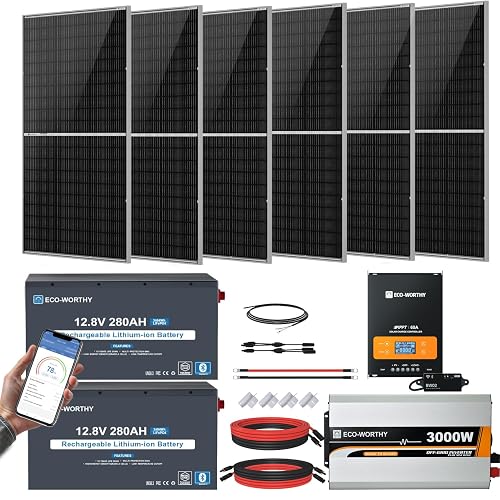
6pcs 195W Solar Panels+2Pcs 12.8V 280Ah Lithium Battery+60A MPPT Charge Controller+3000W Pure Sine Wave Inverter [Ultra] ECO-WORTHY 1200W 24V 4.68KWH Lithium Battery Solar System Off Grid
Best for: Small sheds
A good fit for sheds running LED lights, a charger and a few hand tools. The 4.68kWh lithium pack pairs with a 3000W pure sine inverter.
Pros
- Pure sine wave inverter suits sensitive electronics
- Manageable panel count for small roofs
Cons
- Limited runtime for high-draw tools
ECO-WORTHY 800W Off Grid Kit

4PCS N-Type Bifacial 195W Solar Panel+12.8V 314Ah Lithium Battery+60A MPPT Charge Controller+2000W Pure Sine Wave Inverter ECO-WORTHY 800W Off Grid Solar System Complete Kit for RV Off Grid
Best for: Compact setups
Suits a small, lightly used shed or a workspace that needs modest daily power. The 314Ah battery offers solid storage for its size.
Pros
- Bifacial panels can gain output from reflected light
- Compact overall footprint
Cons
- Lower output limits heavier loads
ECO-WORTHY 1170W Panel Kit

6PCS 195W N-Type Bifacial Solar Panel(1170W)+48V 50Ah Lithium Battery(2.56kWh)+48V 3500W Solar Inverter+Solar Cables&Mounts ECO-WORTHY 1170W Solar Panel Kit Complete System 48V 3500W Output
Best for: Mid-size sheds
Works for sheds with a moderate roof area and steady daily use. The 48V 3500W inverter handles common shed appliances comfortably.
Pros
- Includes cables and mounts
- Good balance of panel and inverter output
Cons
- Battery capacity is modest for multi-day autonomy
ECO-WORTHY 5KW Off Grid Kit

Off Grid Solar Panle Kit with Battery & Inverter:12x195W Panels, 48V 5000W Solar Inverter, 48V 100AH Cubix LiFePO4 Battery ECO-WORTHY 5KW Off Grid Solar System Complete Kit 2340W
Best for: Shed plus garage
Fits owners powering a shed and an attached garage or small outbuilding. Twelve 195W panels provide 2340W of array capacity.
Pros
- LiFePO4 battery chemistry is widely valued for longevity
- 5000W inverter for mixed loads
Cons
- Needs a sizable mounting area
Buying Guide
Match inverter size to your peak load
Add up the wattage of tools and appliances you might run at the same time. Choose an inverter with output above that total, with some margin for startup surges.
Size battery storage to your daily use
Multiply your average daily watt-hours by the number of cloudy days you want to cover. Battery capacity should reflect that figure, not just the panel size.
FAQ
How much power does a shed solar system need to run tools and lights?
Start by adding up the wattage of the tools and lights you run at the same time, then add a margin for startup surges from motors. Most small shed loads fit comfortably within a mid-size inverter, while larger workshops with compressors or welders need more capacity. Checking your peak load first helps you avoid buying more than you need.
Do I need battery storage for a shed solar system?
Battery storage is needed if you want to use power in the evening or on cloudy days, since panels only produce electricity when the sun is shining. A shed that is only used during daylight hours may get by with less storage. Kits with larger batteries give you more runtime but cost more and take up more space.
Can I install a complete off-grid kit myself?
Many people handle the panel mounting and cable runs on their own, especially when the kit includes mounts and cables. Wiring the system into a building or a main electrical panel is a different matter and may require a licensed electrician. Check your local permit rules before starting any installation.
How many solar panels do I need for a shed?
The number of panels depends on how much energy you use each day and how much direct sun your location gets. Panels with higher wattage can generate more power in less space, which helps if your shed roof is small. Matching the panel array to your battery and inverter size keeps the whole system balanced.
Are these kits suitable for an RV or other mobile use?
Some of the smaller kits are designed with compact panels and modest inverters that suit RV-style setups. Mobile use adds vibration, mounting challenges and variable sun exposure, so confirm the mounting hardware fits your vehicle. A smaller kit is usually easier to transport and store when you are not using it.
What maintenance does a shed solar system need?
Solar panels need occasional cleaning to remove dust, leaves or snow that can reduce output. Check cable connections and mounting hardware every few months, and keep batteries in the temperature range recommended by the manufacturer. Following the included manual helps the system last longer.
Conclusion
If you need power for a large workshop or want the most capacity, the larger 10KW kits are the better match, while a smaller kit fits lights and basic tools. Shed owners with modest loads should start with a mid-size or small system and expand later if needs grow.
Buyers who plan to run heavier equipment or a whole outbuilding should prioritize inverter output and storage, whereas those with limited space or mobile needs should focus on compact panels and easy setup. Match the kit to your real daily use, and you will get the most value from your shed solar system.
Related reading
- Solar Power Shed System: 5 Best Kits Compared for 2026
- Shed Solar Panel System: A Step-by-Step Guide for Beginners
- 4 Best Small Solar Panel Systems for Shed Picks for 2026
- Top 5 Solar Power Shed Fan Picks for Ventilation (2026)
- Top 5 Solar Fans for Shed Options for Ventilation in 2026
About Claire Whitaker
Claire Whitaker is part of our editorial team and reviews and edits our small-scale solar guides, checking product details against manufacturer specifications and owner feedback.