 By Claire Whitaker
Updated November 2026
Choosing between a generator vs solar for RV power comes down to how you camp, how much you run, and how quiet you need your site to be. This guide compares portable power stations that can charge from solar panels or a wall outlet, with picks ranked by fit against capacity, output, charging speed, and owner feedback patterns.
Our top picks at a glance
- 1
 TOP CHOICEBest overallEF ECOFLOW DELTA 2 MaxView on Amazon
- 2
 TOP CHOICEBest for small loads146Wh Solar Power Bank with AC OutletView on Amazon
- 3
 TOP CHOICEBest for long runtimeJackery Explorer 2000 v2View on Amazon
- 4
 Best for whole-rig backupJackery HomePower 3000View on Amazon
- 5
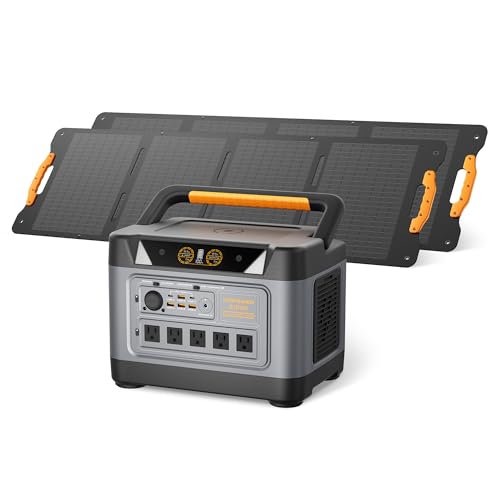 Best for bundled panelsUDPOWER S1200View on Amazon
- 6
 Best for expandable capacityAFERIY 4096Wh Portable Power StationView on Amazon
- 7
 Best for fast rechargingEF ECOFLOW Delta 3 Portable Power Station, 1024Wh 1800W | LiFePO4 BattView on Amazon
Our Top Picks
Quick Comparison
| Product | Best for | Key feature |
|---|---|---|
| EF ECOFLOW DELTA 2 Max | Overall balance | Full charge in 1 hour |
| 146Wh Solar Power Bank | Small loads | Built-in 40W panel |
| Jackery Explorer 2000 v2 | Long runtime | 2042Wh LiFePO4 battery |
| Jackery HomePower 3000 | Whole-rig backup | 3600W AC output |
| UDPOWER S1200 | Bundled panels | Two 120W panels included |
| AFERIY 4096Wh Power Station | Expandable capacity | Extra battery included |
| EF ECOFLOW Delta 3 | Fast recharging | Full charge in 56 minutes |
EF ECOFLOW DELTA 2 Max
2400W LFP Solar Generator, Full Charge in 1 Hr, Solar Powered Generator for Home Backup Camping RV, Solar Panel Optional EF ECOFLOW Portable Power Station DELTA 2 Max 2048Wh, 2400W LiFePO4 Battery
Best for: Overall balance of capacity, output, and quick recharging.
This suits RV owners who want one unit for lights, fridge-adjacent loads, devices, and occasional small appliances without running a noisy generator.
Pros:
- Owners often report fast recharge times from a wall outlet.
- Large 2048Wh capacity covers a typical weekend off-grid.
Cons:
- Heavier than small power banks, so plan for mounting or storage space.
146Wh Solar Power Bank with AC Outlet
146Wh Solar Power Bank with AC Outlet,USB A,USB C, DC Output, Small Solar Generator for Home Use Outdoor Camping RV Van Trip Solar Powered Generator, 100W Portable Power Station with Solar Panels 40W
Best for: Small loads like phones, laptops, and a CPAP-free overnight setup.
This fits solo travelers or weekend campers who need basic charging and light AC use, not a full RV electrical system.
Pros:
- Compact enough to store in a cabinet or overhead bin.
- Includes a 40W panel for daytime top-ups.
Cons:
- 146Wh runs out quickly with anything above light loads.
Jackery Explorer 2000 v2
Jackery Explorer 2000 v2 Portable Power Station, 2042Wh, 2200W AC Output | LiFePO4 Battery, USB-C PD 100W Fast Charging, Solar Generator for Emergencies, Power Outages, Camping (Solar Panel Optional)
Best for: Long runtime between charges.
This suits campers who spend several days off-grid and want a LiFePO4 battery rated for many charge cycles.
Pros:
- 2042Wh capacity supports extended use between recharges.
- 2200W AC output handles most small appliances.
Cons:
- Recharging fully from a wall takes longer than the fastest units here.
Jackery HomePower 3000
Jackery HomePower 3000 Portable Power Station, 3072Wh, 3600W AC Output | 7200W Surge, LFP Battery, Solar Generator, Essential Home Backup for Home Use, Power Outage (Solar Panel Optional)
Best for: Whole-rig backup and higher-wattage loads.
This is for RV owners who want to run more at once, including microwaves and power tools, and can accept a bigger, heavier unit.
Pros:
- 3600W AC output handles demanding appliances.
- 3072Wh capacity suits longer off-grid stays.
Cons:
- Large footprint and weight make it hard to move alone.
UDPOWER S1200
UDPOWER S1200 Portable Power Station with 2 x 120W Solar Panels | 1,191Wh LiFePO4 Battery, 1,200W Output, Solar Generator for Home Backup, Outdoor and Emergency Use
Best for: Buyers who want panels included.
This suits first-time solar users who prefer a kit they can set up in one purchase rather than matching components.
Pros:
- Two 120W panels are included with the station.
- 1,191Wh battery covers basic overnight loads.
Cons:
- Panel output depends on sun angle and shade, so expect variable daily yield.
AFERIY 4096Wh Portable Power Station
Expandable Capacity LiFePO4 Battery Backup,300W DC and 120V 2800W AC Solar Generator for Home Use,Power Outage,Camping,RV AFERIY 4096Wh Portable Power Station,P280 Generator with 1 Extra Battery
Best for: Expandable capacity over time.
This fits RVers who expect to add storage later and want a system that grows with their needs.
Pros:
- Expandable design with an extra battery included.
- Large 4096Wh total capacity for extended stays.
Cons:
- Setup and charging logistics are more involved than single-unit stations.
Buying Guide
Capacity and Runtime Needs
Start by adding up the watt-hours your RV uses in a typical day, including lights, the fridge, phone and laptop charging, and any fans or small appliances. A battery with more watt-hours will run your loads longer, so match capacity to how long you need to stay off the grid between charges.
Output Power and Surge Handling
Check the continuous AC output rating and the surge rating. Appliances with motors, such as a microwave, a coffee maker, or an air conditioner, can need a brief burst of extra power at startup, so a unit with comfortable surge headroom will handle them more reliably.
Charging Options and Speed
Think about how you plan to recharge. Solar input is free once set up but depends on sunshine, while wall charging is faster and more predictable at campgrounds with power. Some units also accept a generator or vehicle input, which can be useful as a backup when the sky is overcast.
Portability and Noise
Weight and size matter when you are moving the unit in and out of an RV or setting it up at a site. Power stations are silent during operation, which is a major advantage over a gas generator if you camp in quiet areas or near neighbors.
Battery Chemistry and Expandability
LiFePO4 batteries are generally favored for RV use because they tolerate many charge cycles and are more stable than some other lithium types. If you expect your needs to grow, look for models that support extra battery packs or additional solar panels.
FAQ
Is solar better than a generator for an RV?
Solar is quieter, produces no fumes, and needs little maintenance, which makes it appealing for stays where you want to run lights and devices without noise. A generator can deliver power regardless of weather, so many RV owners find that a combination of both gives the most flexibility.
How many solar panels do I need for an RV?
The right number depends on your daily energy use, panel wattage, and how many sunny hours you typically get. Panel output varies by location and season, so it is wise to estimate conservatively and add a margin for cloudy days.
Can a portable power station run an air conditioner?
Some larger units can run a small air conditioner for a limited time, but air conditioners draw a lot of power and can drain a battery quickly. Check the unit’s surge rating and capacity against the air conditioner’s specifications before relying on it.
How long does it take to recharge a power station with solar?
Charging time depends on panel wattage, sunlight strength, and the unit’s maximum solar input rating. Full recharges with solar often take most of a day, while wall charging is typically much faster.
Do I still need a generator if I have solar power?
You may not need one for light daily use, but a generator can be a helpful backup during long stretches of bad weather or when you need heavy power for extended periods. Many people keep one as insurance rather than as their main source.
Are power stations safe to use inside an RV?
Power stations produce no exhaust, which makes them safer to use indoors than gasoline generators. Still, follow the manufacturer’s guidance on ventilation, temperature, and cable connections to keep the unit working safely.
Conclusion
If you camp quietly, mostly charge devices and run lights or a fridge, and have some sun exposure, a solar-based power station is a strong choice for most RV owners. Choose a higher-capacity model with good surge headroom if you run larger appliances or stay off the grid for long stretches.
If you need reliable power in cloudy regions, or want to run heavy loads regardless of the weather, a generator paired with a battery station or a larger solar setup will likely serve you best. Many owners find the most dependable approach is combining both options.
Related reading
- Solar Inverter Generator for RV vs Solar Panels: Which Should You Choose?
- Top 5 Solar Generators for RV 30 Amp Picks for Every Need (2026)
- Class B RV Solar vs Class B Solar Kits: Which Should You Choose?
- Best RV Solar Generator: How to Choose the Right One for Your Rig (2026)
About Claire Whitaker
Claire Whitaker is part of our editorial team and reviews and edits our small-scale solar guides, checking product details against manufacturer specifications and owner feedback.


