 By Claire Whitaker
Updated November 2026
Shoppers searching for balcony solar panels for sale usually want one thing: a way to add some renewable power to a small outdoor space without a roof, a contractor or a major commitment. The options range from plug-in grid-tie kits meant for apartment railings to portable folding panels that charge a power station. This list compares seven products across the criteria that matter most for small setups: power rating, mounting approach, what the kit includes, portability, weather protection and how well the product fits a renter’s or condo owner’s situation. We researched specifications, manufacturer documentation, brand reputation and common owner feedback patterns. We did not test these products ourselves.
Our top picks at a glance
- 1
 TOP CHOICEBest overall800W Plug-in Balcony Solar Kit (4-Panel) – Grid-Tie Plug and Play SystView on Amazon
- 2
 TOP CHOICEBest for larger balconies1200W Plug-in Balcony Solar Kit (6-Panel) – Grid-Tie Plug and Play SysView on Amazon
- 3
 TOP CHOICEBest budget pick15W Portable Solar Panel Kit,Solar Lighting System,Home Solar System,1View on Amazon
- 4
 Best for camping and RV useMonocrystalline Solar Panel, Charge Controller, For RV Boat Balcony OfView on Amazon
- 5
 Best for compact installsHQST 400W Solar Panel, 2 * 200W, N-Type, 16BB, up to 25.4% Efficiency, IP65View on Amazon
- 6
 Best for power stations200W Portable Solar Panel for Power Station, 24% High Efficiency ETFEView on Amazon
- 7
 Best for portable chargingN-Type 200 Watt Foldable Solar Panel with Kickstand, Lightweight USB-AView on Amazon
Our Top Picks
| Product | Best for | Key feature |
|---|---|---|
| 800W Plug-in Balcony Solar Kit (4-Panel) | Most apartment balconies | Grid-tie plug-and-play with WiFi monitoring |
| 1200W Plug-in Balcony Solar Kit (6-Panel) | Larger balconies and terraces | Higher output across six panels |
| 15W Portable Solar Panel Kit | Small budget setups and lighting | Includes 12V battery and four bulbs |
| Monocrystalline Solar Panel Kit (2Pcs 500W) | Camping, RV and off-grid use | Includes charge controller and flexible panels |
| HQST 400W Solar Panel (2 x 200W) | Compact rooftop or railing installs | N-type cells, IP65 rating |
| 200W Portable Solar Panel for Power Station | Charging a portable power station | ETFE surface, QC3.0 and Type-C outputs |
| N-Type 200W Foldable Solar Panel | Portable charging on the go | Foldable with kickstand and USB outputs |
800W Plug-in Balcony Solar Kit (4-Panel) – Grid-Tie Plug and Play System with APsystems Microinverter, WiFi Monitoring & UL 3700 Certification
800W Plug-in Balcony Solar Kit (4-Panel) – Grid-Tie Plug and Play System with APsystems Microinverter, WiFi Monitoring & UL 3700 Certification
Best for: Most apartment balconies with a sunny railing or wall exposure
This kit suits renters and condo owners who want a grid-connected system they can install without roof work. It is designed around a plug-in microinverter approach, which is the central idea behind most balcony solar products sold today.
Key specs
- System rating: 800W (4-panel kit)
- Microinverter: APsystems
- Monitoring: WiFi
- Certification: UL 3700 (as stated in the listing)
Pros
- Plug-and-play setup designed for residential outlets
- WiFi monitoring lets you track output from a phone
- Listing states UL 3700 certification, a relevant standard for this category
Cons
- Local rules on plug-in solar vary, so check permission from your landlord or HOA first
- Four panels need a suitable, well-lit mounting area
Bottom line: A strong first choice for apartment dwellers who want a grid-tied system and have a sunny balcony with space for four panels.
1200W Plug-in Balcony Solar Kit (6-Panel) – Grid-Tie Plug and Play System with APsystems Microinverter, WiFi Monitoring & UL 3700 Certification
1200W Plug-in Balcony Solar Kit (6-Panel) – Grid-Tie Plug and Play System with APsystems Microinverter, WiFi Monitoring & UL 3700 Certification
Best for: Larger balconies, terraces and rooftop decks with room for six panels
This is the bigger sibling of the 800W kit, aimed at people with more mounting space and higher daily energy use. It uses the same microinverter platform, so the setup logic is similar.
Key specs
- System rating: 1200W (6-panel kit)
- Microinverter: APsystems
- Monitoring: WiFi
- Certification: UL 3700 (as stated in the listing)
Pros
- Higher output than the 4-panel kit for the same type of installation
- Same WiFi monitoring and plug-and-play approach
- Listing states UL 3700 certification
Cons
- Six panels are heavier and need stronger mounting hardware
- More space and sun exposure are required to get the rated benefit
Bottom line: Pick this if your balcony or terrace can hold six panels safely and you want more output than a 4-panel setup.
15W Portable Solar Panel Kit, Solar Lighting System, Home Solar System, 12V Battery, 4 Bulbs, USB, IP65
15W Portable Solar Panel Kit,Solar Lighting System,Home Solar System,12V Battery,4 Bulbs,USB, IP65,Solar Electricity Plug-in Balcony Solar Panel Kit,15W Solar Generator with 4 Bulbs
Best for: Small budget setups and solar-powered lighting on a balcony
This is the entry-level option. It is not meant to run appliances, but it can light a small balcony and charge small USB devices. It is a good way to learn how panels, batteries and loads interact before buying something larger.
Key specs
- Panel rating: 15W
- Battery: 12V (as listed)
- Bulbs included: 4
- Outputs: USB
- Ingress rating: IP65 (as listed)
Pros
- Lowest-cost way into balcony solar that includes a battery and lights
- Simple setup suited to beginners
- IP65 rating supports outdoor use
Cons
- 15W output is too small for most appliances or a full apartment
- Battery capacity limits how long lights run after dark
Bottom line: Best for someone who wants to test solar on a balcony for lighting and phone charging without a large commitment.
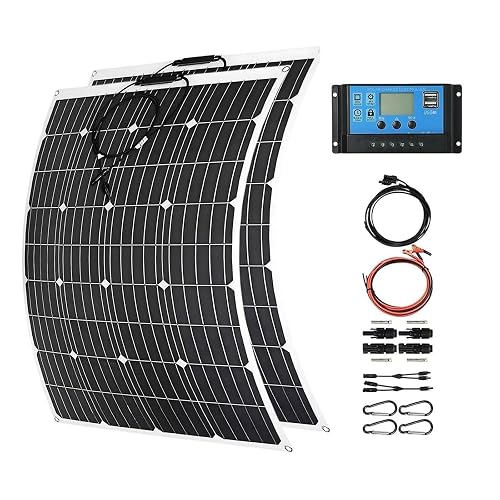
Monocrystalline Solar Panel, Charge Controller, For RV Boat Balcony Off-Grid Home Camping Tent 1000 Watt Solar Panel Kit Portable 2Pcs 500W Flexible Photovoltaic Panels
Monocrystalline Solar Panel, Charge Controller, For RV Boat Balcony Off-Grid Home Camping Tent 1000 Watt Solar Panel Kit Portable 2Pcs 500W Flexible Photovoltaic Panels
Best for: Camping, RV and off-grid use, with occasional balcony mounting
This kit is built around flexible monocrystalline panels and a charge controller, the core components of a small off-grid system. It fits people who move their setup between a balcony, a vehicle and campsites.
Key specs
- Panels: 2 flexible monocrystalline panels (as listed, 500W total)
- Includes charge controller (as listed)
- Intended for RV, boat, camping and balcony use
Pros
- Includes a charge controller, which many simple kits omit
- Flexible panels adapt to curved or irregular surfaces
- Versatile across balcony, vehicle and camping use
Cons
- Flexible panels typically run hotter and may degrade faster than rigid panels, according to general manufacturer guidance
- A battery and inverter are needed separately to run household loads
Bottom line: A practical choice for people who want one kit for both balcony and mobile off-grid use.
HQST 400W Solar Panel, 2 * 200W, N-Type, 16BB, up to 25.4% Efficiency, IP65
Compact 46.3*30.1*1.2 inch, Grade A+ Cells, 30-Year Life, Low-Light Performance, for RV, Trailer, Marine, Rooftop, Off Grid HQST 400W Solar Panel, 2 * 200W, N-Type, 16BB, up to 25.4% Efficiency, IP65
Best for: Compact rooftop, railing or RV installs where space is limited
This pair of 200W N-type panels is a good fit for someone who wants rigid, higher-efficiency modules in a footprint that still fits a small balcony. It is a panel-only product, so you will need a charge controller and a battery or inverter for a complete system.
Key specs
- Total rating: 400W (2 x 200W, as listed)
- Cell type: N-type, 16BB (as listed)
- Efficiency: up to 25.4% (as listed)
- Ingress rating: IP65 (as listed)
Pros
- N-type cells are generally associated with better low-light and temperature performance
- High listed efficiency for the space used
- IP65 rating supports weather exposure
Cons
- Panel-only; a controller and battery or inverter must be bought separately
- Rigid panels need secure mounting hardware to handle wind load
Bottom line: Suited to a DIY-minded buyer who wants efficient rigid panels for a compact balcony or RV build.
200W Portable Solar Panel for Power Station, 24% High Efficiency ETFE Foldable Solar Panel Charger, QC3.0, Type-C 60W, MC4 Output, IP65 Waterproof
200W Portable Solar Panel for Power Station, 24% High Efficiency ETFE Foldable Solar Panel Charger, QC3.0, Type-C 60W, MC4 Output, IP65 Waterproof, for Outdoor Camping, RV, Emergency Power Supply
Best for: Charging a portable power station from a balcony or patio
This panel is designed to pair with a portable power station rather than a home circuit. It suits someone who wants to keep a battery pack topped up without a permanent installation.
Key specs
- Panel rating: 200W (as listed)
- Efficiency: 24% (as listed)
- Surface: ETFE (as listed)
- Outputs: QC3.0, Type-C 60W, MC4 (as listed)
- Ingress rating: IP65 (as listed)
Pros
- Works with power stations through MC4 output
- ETFE surface is durable and lightweight
- IP65 rating for outdoor conditions
Cons
- Not a grid-connected product and cannot feed household circuits
- Power station compatibility should be checked before buying
Bottom line: A good match for people who already own or plan to buy a power station and want a balcony charger for it.
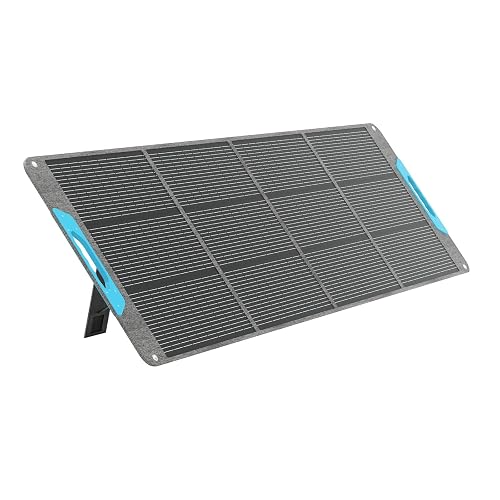
N-Type 200 Watt Foldable Solar Panel with Kickstand, Lightweight USB-A/Type-C Outputs, for Camping, RV, Blackout, Off-Grid
N-Type 200 Watt Foldable Solar Panel with Kickstand, Lightweight USB-A/Type-C Outputs, for Camping, RV, Blackout, Off-Grid Renogy 200W Portable Solar Panel for Power Stations, 25% Efficiency
Best for: Portable charging on a balcony, patio or trip
This foldable panel is aimed at people who want to move their charger around. The kickstand lets you angle it toward the sun without a permanent mount.
Key specs
- Panel rating: 200W (as listed)
- Cell type: N-type (as listed)
- Outputs: USB-A and Type-C (as listed)
- Design: foldable with kickstand
Pros
- Foldable and portable for easy storage
- Kickstand allows adjustable tilt
- Built-in USB outputs for direct device charging
Cons
- Direct USB output depends on sunlight and can be interrupted by clouds
- Not suitable for permanent installation on a railing
Bottom line: Best for people who want portable charging that can move between a balcony and a trip.
Buying Guide
Grid-tie versus off-grid and portable systems
The first decision is whether you want power that feeds your home circuit or power that charges a battery or device. Plug-in grid-tie kits connect to household wiring through a microinverter. Off-grid and portable kits store energy in a battery or power station. Check your local rules before choosing a grid-tie kit, since some regions restrict or require approval for plug-in systems.
Good picks for this: 800W Plug-in Balcony Solar Kit (4-Panel), 1200W Plug-in Balcony Solar Kit (6-Panel)
Wattage and what you need it to run
List the devices you want to power and their approximate daily energy use. A 15W panel can light a few bulbs and charge a phone. A 200W panel can charge a power station meaningfully over a sunny day. Larger kits make sense when you want to offset part of a household load. Remember that real output depends on sun hours, angle and shading.
Good picks for this: 15W Portable Solar Panel Kit, 200W Portable Solar Panel for Power Station
Size, weight and mounting fit
Measure your railing height, width and load limits before buying. Rigid panels are heavier and need secure brackets. Flexible or foldable panels are lighter but may be less durable over the long term. Make sure the panel footprint leaves clear space for access and does not block doors or furniture.
Good picks for this: HQST 400W Solar Panel, Monocrystalline Solar Panel Kit
Efficiency and cell type
Efficiency is the percentage of sunlight a panel converts to electricity. Higher efficiency means more output from a smaller area. N-type cells are widely described by manufacturers as offering better low-light and temperature behavior than some older cell types. Compare listed efficiency values, but treat them as lab-style figures rather than guaranteed daily output.
Good picks for this: HQST 400W Solar Panel, N-Type 200W Foldable Solar Panel
Weather protection and durability
Look for an ingress protection rating. IP65 indicates protection against dust and water jets, as described by the IEC 60529 standard. Check the frame, glass or ETFE surface, and cable connectors. Outdoor balcony gear faces rain, wind and UV exposure, so durability matters more than on an indoor product.
Good picks for this: 200W Portable Solar Panel for Power Station, 15W Portable Solar Panel Kit
Certification and safety
For plug-in systems, check whether the listing states certification to a recognized standard such as UL 3700. Certifications indicate the product was evaluated against a safety standard, but they do not guarantee compatibility with your specific wiring. If you are unsure, have a licensed electrician review the setup.
Good picks for this: 800W Plug-in Balcony Solar Kit (4-Panel), 1200W Plug-in Balcony Solar Kit (6-Panel)
Use case: fixed balcony, RV or mobile charging
Decide whether the system will stay put. Fixed balcony installs benefit from permanent brackets and grid-tie hardware. Camping and RV setups need portability and a charge controller. Mobile charging works best with foldable panels and built-in USB outputs. Matching the product to how you will actually use it prevents buyer’s remorse.
Good picks for this: Monocrystalline Solar Panel Kit, N-Type 200W Foldable Solar Panel
FAQ
Are balcony solar panels legal for renters?
It depends on your lease, HOA and local regulations. Some places allow plug-in systems with notice, while others require approval or prohibit them. Check with your landlord or building management and your local utility before installing anything.
Can I run an air conditioner on a balcony solar panel?
Most balcony kits are not sized for air conditioners, which draw large amounts of power. Small kits are better suited to lighting, phone charging and small electronics. Consult a licensed electrician for any load planning.
What is a microinverter?
A microinverter converts the direct current from one or a few panels into alternating current that can feed household wiring. Plug-in balcony kits use microinverters so each panel operates somewhat independently.
Do I need a battery with a balcony solar panel?
Grid-tie plug-in kits send power to your home circuit and do not need a battery. Portable and off-grid kits usually require a battery or power station to store energy for use after dark.
How much sun does a balcony panel need?
Most panels perform best with several hours of direct sun. Shade from buildings, railings or trees reduces output. Check your balcony’s orientation and sun exposure before buying.
Is IP65 rating important for balcony panels?
IP65 indicates protection against dust and low-pressure water jets. It is a useful sign of outdoor suitability, but it does not mean the product is waterproof for submersion.
Should I hire a professional to install a balcony solar system?
For plug-in grid-tie systems, consulting a licensed electrician is strongly recommended, especially for code compliance and safe connection to household wiring. Portable kits generally need less professional help.
Conclusion
For most apartment balconies, the 800W plug-in kit offers a practical balance of output and grid-tie simplicity, and the 1200W kit suits larger spaces. If you only want lighting or phone charging, the 15W kit is the simplest entry point. Camping and RV users will find the monocrystalline kit versatile, while the HQST pair fits compact rigid installs. For power station owners, the 200W panel for power stations is a direct match, and the foldable N-type panel suits people who want to move their charger. Always confirm local rules and compatibility before buying.
Sources
- Federal guidance on how residential solar systems work and what to consider before installing one (energy.gov)
- Research on solar panel performance, efficiency and environmental operating conditions (nrel.gov)
- International standards for photovoltaic modules, including performance and durability testing
Related reading
- Top 7 Solar Panels for Balcony Picks for Apartments and Small Spaces
- Top 6 Solar Panels for Apartment Balcony Options Compared in 2026
- How Do Balcony Solar Panels Work? A Step-by-Step Guide for Beginners
- DIY Balcony Solar Panels: A Step-by-Step Guide for Beginners
- Balcony Solar Panels Germany Energy Savings: A Step-by-Step Guide
About Claire Whitaker
Claire Whitaker is part of our editorial team and reviews and edits our small-scale solar guides, checking product details against manufacturer specifications and owner feedback.