 By Claire Whitaker
Updated November 2026
Boondocking means camping away from hookups, so your RV has to make its own power. The best solar panels for RV boondocking are the ones that match your battery bank, your roof space, and how much you actually run each day. This guide compares seven panels and kits that owners commonly use for off-grid trips. We weighed manufacturer specifications, brand reputation, and the patterns that show up in owner feedback, including how panels handle partial shade, how they fold or mount, and whether they come with the controller and wiring you need. Start by sizing your load, then pick the option that fits your space and budget.
Our top picks at a glance
- 1
 TOP CHOICEBest overallRenogy 200W ShadowFlux N-Type RV Solar Panel KitView on Amazon
- 2
 TOP CHOICEBest for small rigsECO-WORTHY 200 Watts 12 Volt/24 Volt Solar Panel KitView on Amazon
- 3
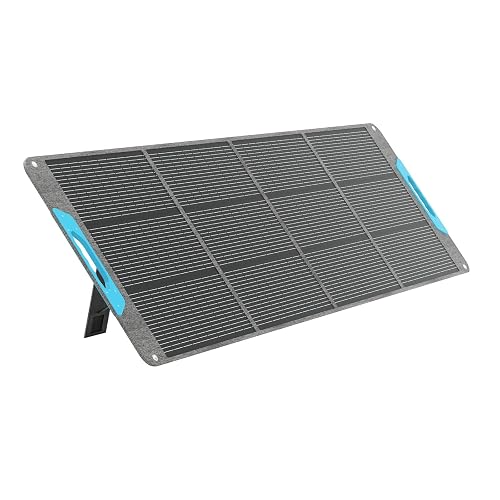 TOP CHOICEBest for portable setupsN-Type 200 Watt Foldable Solar Panel with KickstandView on Amazon
- 4
 Best for power station pairing25% Efficiency Foldable Solar Panel for EcoFlow Delta/Anker C1000/Jackery/BluettiView on Amazon
- 5
 Best for roof-mounted 400W output2PCS 200W Solar Panels for RV Class B Van Marine Cabin RoofView on Amazon
- 6
 Best for high-output portable useRENOGY REGO 400W Portable Solar PanelView on Amazon
- 7
 Best budget pickN-Type 16BB 400W Bifacial Solar Panel, 2Pcs 200 Watt Solar PanelView on Amazon
Our Top Picks
| Product | Best for | Key feature |
|---|---|---|
| Renogy 200W ShadowFlux N-Type RV Solar Panel Kit | Full off-grid system upgrade | Kit with LiFePO4 battery, inverter, and DC-DC charger |
| ECO-WORTHY 200 Watts 12V/24V Solar Panel Kit | Small rigs and vans | Includes 30A PWM charge controller |
| N-Type 200 Watt Foldable Solar Panel with Kickstand | Portable ground setups | Folding design with kickstand |
| 25% Efficiency Foldable Solar Panel for Power Stations | Pairing with a portable power station | IP68 waterproof rating |
| 2PCS 200W Solar Panels for RV Class B Van | Roof-mounted charging on a van or Class B | Two 200W modules for 400W total |
| RENOGY REGO 400W Portable Solar Panel | High-output portable charging | 400W folding panel with N-Type cells |
| N-Type 16BB 400W Bifacial Solar Panel, 2Pcs 200W | Budget-minded rooftop expansion | Bifacial design with anti-shade parallel wiring |
Renogy 200W ShadowFlux N-Type RV Solar Panel Kit
Renogy 200W ShadowFlux N-Type RV Solar Panel Kit, 3.8KWh Anti-Shading Solar Solution, W/3840Wh LiFePO4 Battery, 50A DC-DC Charger, 2000W PUH Inverter, Bluetooth App Monitoring for RV Off-Grid Camping
Best for: Full off-grid system upgrade
This kit suits RV owners who want a complete boondocking power system rather than assembling individual parts. It is aimed at people who plan extended trips and want battery storage, an inverter, and a charger matched to the panel array.
Key specs
- 200W N-Type solar panel array
- 3840Wh LiFePO4 battery
- 50A DC-DC charger
- 2000W pure sine wave inverter
- Bluetooth app monitoring
Pros
- Components are sized to work together
- Battery and inverter included, reducing guesswork
- App monitoring lets you track charge and load
Cons
- Higher up-front commitment than a panel-only purchase
- Installation takes more time and wiring knowledge
Bottom line: Best for RV owners ready to commit to a full off-grid system who want fewer separate purchases.
ECO-WORTHY 200 Watts 12 Volt/24 Volt Solar Panel Kit
ECO-WORTHY 200 Watts 12 Volt/24 Volt Solar Panel Kit with High Efficiency Monocrystalline Solar Panel and 30A PWM Charge Controller for RV, Camper, Vehicle, Caravan and Other Off Grid Applications
Best for: Small rigs
This kit fits smaller campers, vans, and caravans where roof space is limited and the power demand is modest. It is a practical starting point for someone adding solar for the first time.
Key specs
- 200W monocrystalline panel
- 12V/24V system compatibility
- 30A PWM charge controller included
Pros
- Includes controller, so fewer parts to match
- Works with both 12V and 24V battery systems
- Straightforward roof or ground mounting
Cons
- PWM controller is less efficient than MPPT in cold or low-light conditions
- 200W may fall short for heavy daily loads
Bottom line: A sensible pick for owners with a small rig and light daily consumption.
N-Type 200 Watt Foldable Solar Panel with Kickstand
N-Type 200 Watt Foldable Solar Panel with Kickstand, Lightweight USB-A/Type-C Outputs, for Camping, RV, Blackout, Off-Grid Renogy 200W Portable Solar Panel for Power Stations, 25% Efficiency
Best for: Portable ground setups
This panel suits campers who set up on the ground at a campsite and want to angle it toward the sun. Its USB outputs make it useful for phones, cameras, and small devices alongside an RV battery.
Key specs
- 200W foldable panel
- Built-in kickstand
- USB-A and Type-C outputs
Pros
- Folds down for easy transport
- Kickstand allows adjustable angle
- Direct USB outputs for small devices
Cons
- Ground setups require securing against wind and theft
- Not designed as a permanent roof installation
Bottom line: Best for owners who want a portable panel they can reposition throughout the day.
25% Efficiency Foldable Solar Panel for EcoFlow Delta/Anker C1000/Jackery/Bluetti
25% Efficiency Foldable Solar Panel for EcoFlow Delta/Anker C1000/Jackery/Bluetti,IP68 Waterproof for Offgrid RV Power Backup ZOUPW 450W Portable Solar Panel N-Type 16BB for Power Station
Best for: Pairing with a portable power station
This panel targets owners who already use a portable power station and want to recharge it from the sun while boondocking. It is well suited to a setup where the station, not the RV battery, is the main storage.
Key specs
- 25% stated efficiency
- Foldable design
- IP68 waterproof rating
Pros
- Designed to pair with popular power station brands
- IP68 rating suits dusty or wet campsites
- Foldable for storage in a compartment
Cons
- Output depends on your power station’s input limits
- Compatibility should be checked against your specific station model
Bottom line: Best for owners who rely on a power station and want a matching portable charger.
2PCS 200W Solar Panels for RV Class B Van Marine Cabin Roof
2PCS 200W Solar Panels for RV Class B Van Marine Cabin Roof Home Farm and Other Off-Grid Systems, IP67 Renogy Solar Panels 400 Watt N-Type, 16BB 25% High-Efficiency
Best for: Roof-mounted 400W output
This two-panel set suits Class B vans and similar rigs where you want fixed roof panels that deliver 400W combined. It fits owners who want permanent solar without a large footprint.
Key specs
- Two 200W panels (400W total)
- N-Type 16BB cells
- IP67 rating
Pros
- Good output for a van-sized roof
- IP67 rating suits harsh weather
- Modular, so panels can be wired in parallel or series
Cons
- Roof mounting requires drilling and sealing
- Needs a compatible charge controller sized for 400W
Bottom line: Best for van and Class B owners who want permanent roof solar with a clear 400W output.
RENOGY REGO 400W Portable Solar Panel
Foldable Blanket Solar Panel, Lightweight , IP65 Waterproof, Charger for Camping, RV, Marine, SUV, Off Grid Applications RENOGY REGO 400W Portable Solar Panel, N-Type 25% High Efficiency
Best for: High-output portable charging
This 400W folding panel gives boondockers a larger portable option. It suits people who park in open sun and want to put more energy into the battery each day without mounting anything to the roof.
Key specs
- 400W portable folding panel
- N-Type 25% high-efficiency cells
- Waterproof, rugged construction
Pros
- Higher output in a portable format
- No roof installation required
- Folds for transport and storage
Cons
- Large when unfolded and needs a clear site
- Requires regular repositioning to follow the sun
Bottom line: Best for owners who want maximum portable output and have open ground for setup.
N-Type 16BB 400W Bifacial Solar Panel, 2Pcs 200 Watt Solar Panel
N-Type 16BB 400W Bifacial Solar Panel, 2Pcs 200 Watt Solar Panel for 12V/24V Systems, 25.6% High Efficiency, Dual-Module Parallel Anti-Shade Design, for RV Van Marine Home Rooftop Off-Grid
Best for: Budget-minded rooftop expansion
This two-panel bifacial set suits owners who want to add rooftop capacity without a premium system. Its parallel wiring design is aimed at reducing losses when part of the array is shaded.
Key specs
- Two 200W panels (400W total)
- N-Type 16BB cells
- Bifacial, dual-module parallel design
- 12V/24V system compatibility
Pros
- Parallel design helps limit shade losses
- Good output for the size
- Works with 12V and 24V systems
Cons
- Bifacial benefit depends on mounting height and surface
- Controller and wiring are not included
Bottom line: A solid choice for owners who want rooftop 400W capacity and already have a controller.
Buying Guide
Panel Output and Your Daily Power Budget
Add up the watt-hours your RV uses each day, then divide by the peak sun hours you expect at your campsites. This tells you roughly how much panel wattage you need. Most boondockers find that a single 200W panel supports light use, while 400W or more is needed for fridges, lights, and fans running in summer.
Good picks for this: Renogy 200W ShadowFlux N-Type RV Solar Panel Kit, RENOGY REGO 400W Portable Solar Panel
Charge Controller Type
PWM controllers are simpler and less costly, but MPPT controllers generally harvest more energy, especially when panel voltage is higher than battery voltage or in cool weather. Match the controller to both your panel wattage and battery voltage.
Good picks for this: ECO-WORTHY 200 Watts 12 Volt/24 Volt Solar Panel Kit, 2PCS 200W Solar Panels for RV Class B Van
Size and Fit for Your Roof or Site
Measure your roof’s usable area, accounting for vents, air conditioners, and ladder mounts. For portable panels, check the folded and unfolded dimensions against your storage space. A panel that cannot be stored or placed in open sun will not earn its keep.
Good picks for this: N-Type 200 Watt Foldable Solar Panel with Kickstand, N-Type 16BB 400W Bifacial Solar Panel
Portability and Setup Time
Folding panels with kickstands let you chase the sun through the day, which can raise output compared with a fixed roof panel. The tradeoff is setup time, cable routing, and the need to secure panels against wind and theft at camp.
Good picks for this: 25% Efficiency Foldable Solar Panel for EcoFlow Delta/Anker C1000/Jackery/Bluetti, RENOGY REGO 400W Portable Solar Panel
Waterproof and Weather Ratings
Look for IP ratings on the listing. IP67 and IP68 indicate strong resistance to dust and water. Boondocking often means exposure to rain, dust, and temperature swings, so a robust rating matters more than it would for a driveway setup.
Good picks for this: 25% Efficiency Foldable Solar Panel for EcoFlow Delta/Anker C1000/Jackery/Bluetti, 2PCS 200W Solar Panels for RV Class B Van
Compatibility With Your Battery and Power Station
Confirm your battery voltage (commonly 12V or 24V) and check whether a power station supports the panel’s input voltage and wattage. Mismatched voltage can prevent charging or damage equipment. Check your battery and station manuals before buying.
Good picks for this: Renogy 200W ShadowFlux N-Type RV Solar Panel Kit, ECO-WORTHY 200 Watts 12 Volt/24 Volt Solar Panel Kit
Care and Long-Term Durability
Keep panel surfaces clean, check mounting hardware and cable connections periodically, and inspect seals on roof installations. Dust and bird droppings reduce output, so occasional cleaning helps. Manufacturers typically specify care and warranty terms in the product documentation.
Good picks for this: N-Type 16BB 400W Bifacial Solar Panel, 2PCS 200W Solar Panels for RV Class B Van
FAQ
How many solar watts do I need for boondocking?
It depends on your daily amp-hour use. Calculate your total watt-hours per day, then divide by your expected peak sun hours. Many light users manage with 200W, while heavier users often run 400W or more.
Is a portable panel better than a roof panel?
Portable panels can capture more sun because you can angle them, but they require setup and security. Roof panels are always ready and suit people who park for long stretches.
Do I need an MPPT or PWM controller?
MPPT controllers usually extract more energy, particularly in cool or low-light conditions. PWM controllers are simpler and can work well for smaller systems with matched voltage.
Can I connect two 200W panels in parallel?
Parallel wiring keeps voltage the same and adds current, which is common for 12V systems. Check that your controller can handle the combined current and follow the manufacturer’s wiring diagram.
Do solar panels work in cloudy weather?
Yes, but output drops significantly. Panels still generate power under diffuse light, though far less than in full sun, so plan for a battery buffer on overcast days.
Will shade ruin my output?
Shade on one section can reduce output more than expected in series-wired arrays. Parallel designs and bypass diodes help limit this effect. Keep panels clear of vents, antennas, and overhanging branches where possible.
Conclusion
For a complete off-grid upgrade, the Renogy ShadowFlux kit offers the most integrated path. Small rigs with light loads do well with the ECO-WORTHY kit. Owners who rely on a power station should look at the EcoFlow-compatible foldable panel, while van and Class B owners will get the most from the two-panel roof set. For maximum portable output, the 400W REGO panel fits best. Match your choice to your daily power budget, mounting style, and battery system, and verify compatibility before you buy.
Sources
- Solar energy basics, system components, and how panels convert sunlight into electricity (energy.gov)
- Solar resource data and peak sun hour estimates for planning energy budgets (nrel.gov)
- Safety certification standards for electrical and photovoltaic equipment (ul.com)
Before you buy: helpful guides
- DIY Solar Panels for RV: A Step-by-Step Guide for Beginners
- Installing Solar Panels RV: A Step-by-Step Guide for Beginners
- Mounting Solar Panel on RV: A Step-by-Step Guide for Beginners
- Renogy RV Solar Panels: How to Choose and Install the Right Kit
- How Many Watt Solar Panel to Maintain RV Battery? A Practical Answer
About Claire Whitaker
Claire Whitaker is part of our editorial team and reviews and edits our small-scale solar guides, checking product details against manufacturer specifications and owner feedback.