 By Claire Whitaker
Updated November 2026
Running an RV on solar works well for people who boycott generator noise, camp in quiet places, and spend most nights parked rather than driving. A generator still wins for heavy loads like roof air conditioning, long rainy stretches, or quick top-ups when the sun is hiding. For most weekend and seasonal campers, the best answer is a solar-first system with a small generator kept as backup, but the right balance depends on how you actually camp.
| Criterion | Solar (panels + battery + inverter) | Portable Generator |
|---|---|---|
| Noise while running | Silent | Audible, often 50–70 dB depending on model and load |
| Fuel needed | None; sunlight is free | Gasoline, propane, or dual-fuel |
| Runtime limits | Limited by sun and battery size | Runs as long as you have fuel |
| Maintenance | Panel cleaning, battery checks | Oil changes, carburetor care, spark plugs |
| Best for air conditioning | Limited; needs a large battery bank or a lithium setup | Can start a rooftop unit with enough wattage |
| Emissions and fumes | None at the campsite | Exhaust; must be kept well away from windows and vents |
| Campsite rules | Usually allowed everywhere | Many campgrounds limit hours or ban them |
Noise and Campsite Comfort: Solar Wins
If you have ever camped next to a running generator, you know how quickly it changes the mood of a site. Solar produces no sound at all. Inverters make a faint hum under heavy load, but nothing close to a gas engine. Many campgrounds set quiet hours, often from around 10 p.m. to 7 a.m., and some restrict generators entirely. Owners who camp in national forests or state parks often report that solar is the only setup that avoids complaints from neighbors and rangers.
Winner: Solar. For quiet campsites, dispersed camping, and early bedtimes, solar is the clear choice.
Fuel, Running Costs, and Logistics: Solar Wins Once Installed
A generator needs gasoline or propane every time you run it. Over a long trip, that adds up, and you have to carry jerry cans or refill tanks along the way. Solar charges from sunlight, so once the panels and battery are mounted, there is nothing to buy or haul. The tradeoff is the upfront setup, which requires planning. If you are new to this, the guide Solar Setup for RV: A Step-by-Step Guide for Beginners walks through the sequence of mounting, wiring, and testing.
Solar also works while you sleep in a campsite, sit by a lake, or drive during the day if your panels are mounted on the roof. A generator only works when it is running and fueled.
Winner: Solar. Ongoing fuel logistics disappear entirely.
Power Output and Runtime: Generator Wins
This is where generators earn their place. A 2000-watt inverter generator can run a microwave, coffee maker, and a battery charger at the same time. Solar output depends on panel wattage, sun angle, shade, and weather. Two 200-watt panels on a clear day might produce roughly 80–100 amp-hours into a 12V battery over a good midday, but that drops sharply on cloudy days. Running a roof air conditioner on solar usually requires a substantial lithium battery bank and a large inverter. For a deeper look at what cooling takes, see Solar Powered RV Air Conditioning: What Actually Works in 2026 and Solar RV AC Unit Picks: 5 Best Options for Off-Grid Cooling (2026).
Generators also do not care about the weather. A week of overcast skies is a real problem for solar-only setups, while a generator will keep running as long as you feed it fuel.
Winner: Generator. For high loads and unpredictable weather, a generator delivers consistent power with less planning.
Maintenance and Reliability: Solar Wins
Solar has few moving parts. Panels need occasional cleaning and a check that mounts and wiring remain tight. Batteries need the correct charging profile and periodic inspection. Generators need oil changes, air filter swaps, spark plug checks, and fuel stabilizer for storage. Owners often report that generators are reliable when maintained but cause frustrating no-start situations after months of sitting unused.
Solar systems can fail too, usually from a loose connection, a blown fuse, or a charge controller set incorrectly. Many of these problems are simple to diagnose once you know where to look.
Winner: Solar. Less routine maintenance and fewer mechanical failure points.
Safety and Air Quality: Solar Wins
Generators produce carbon monoxide. Every generator should be placed well away from your RV’s doors, windows, and roof vents, and a working CO detector is essential. Solar produces no exhaust. That said, solar installations involve high DC currents, and battery banks can release hydrogen during charging. Keep batteries ventilated and follow manufacturer wiring guidance. If you are unsure about wiring, consult a qualified RV electrician or installer before connecting anything to your coach’s electrical system.
Winner: Solar. No exhaust, but both systems require careful handling.
Upfront Setup Effort: Generator Wins
A portable generator is a plug-and-go purchase. You fill it, start it, and connect it. A solar system takes planning: sizing panels to your power use, choosing a battery and inverter, mounting panels to the roof, and running cables. Many people handle this themselves, but it is more work than buying a generator. Resources like Solar Panel to Charge RV Battery: A Step-by-Step Guide (2026) and RV Solar System Installation: A Step-by-Step Guide for Beginners can help you through the process.
Winner: Generator. It is faster to get running.
Which Should You Choose?
- Choose solar if you camp in quiet places, stay put for days at a time, and want to avoid fuel and noise complaints.
- Choose solar if your electrical needs are mostly lights, fans, phone and laptop charging, a fridge, and a water pump.
- Choose a generator if you regularly run roof air conditioning, microwaves, or induction cooktops for long periods.
- Choose a generator if you camp in areas with frequent cloud cover or forest canopy that blocks sunlight.
- Choose a hybrid if you want quiet solar days with a backup for cloudy weeks. Many owners pair solar with a small inverter generator for this reason.
For a comparison of how these two approaches are often combined, read Solar Inverter Generator for RV vs Solar Panels: Which Should You Choose?.
Recommended options for each approach:
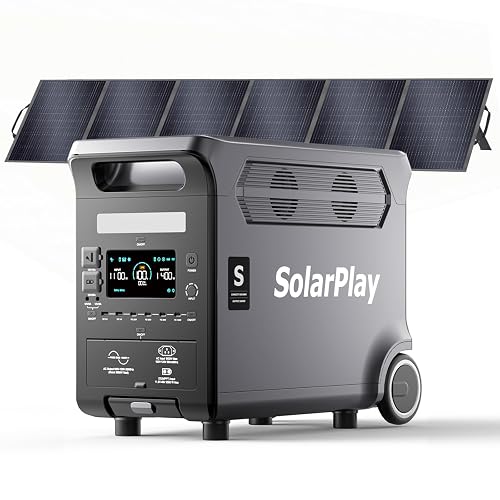
Solar starter option: View on Amazon
Portable generator option: View on Amazon
FAQ
Can you run an RV entirely on solar?
Yes, but it depends on your power use. Lights, fans, a 12V fridge, and device charging are manageable with a modest panel array and battery. Running a roof air conditioner or electric cooktop fully on solar requires a much larger battery bank and panel setup, and many people find a backup charging source useful.
How many solar panels do I need to run my RV?
It depends on daily amp-hour use. List each appliance, its wattage, and hours of use, then total the watt-hours per day. Add a margin for cloudy days. Manufacturers’ sizing guides and installers can help convert that number into panel wattage and battery capacity.
Is it quieter to run solar than a generator at night?
Yes. Solar systems make no engine noise. Inverters produce only faint sound under load. This is one reason solar is popular for boondocking and campgrounds with quiet-hour rules.
What happens to solar power on cloudy days?
Output drops significantly, often to a fraction of sunny-day production. If you rely on solar, a larger battery bank helps carry you through overcast periods, and some owners keep a generator or shore power as backup.
Should I hire a professional to install RV solar?
Many people install simple kits themselves, but high-current DC wiring and battery installation carry real risks. If you are not confident with electrical work, consult a qualified RV technician or electrician before connecting anything to your coach.
Conclusion
Running an RV on solar is the better choice for quiet, low-maintenance camping, especially if you stay put for stretches and keep your power needs modest. A generator remains the practical option for heavy loads, cloudy climates, and quick setups. Many experienced campers end up using both, letting solar handle daily needs and a generator cover the exceptions. Match the system to how you camp, not to what sounds most impressive.
Before you buy: helpful guides
Related reading
- Top 6 RV Solar Power System Picks for Every Need (2026)
- Top 5 Solar Chargers for RV Picks for Every Need
- Solar Panels RV Installation: 5 Best Mounting Kits and Panels (2026)
About Claire Whitaker
Claire Whitaker is part of our editorial team and reviews and edits our small-scale solar guides, checking product details against manufacturer specifications and owner feedback.