 By Ethan Brooks
Updated November 2026
Choosing a portable solar panel for RV use comes down to how much power you need, how much weight you can carry, and whether you plan to park in shade or chase full sun. This list compares seven folding and suitcase-style panels by wattage, output, build quality and how well they suit typical RV and camping setups. Each pick is based on manufacturer specifications and patterns in owner feedback, not on our own testing.
Our top picks at a glance
- 1
 TOP CHOICEBest overallRenogy 200W 12V Portable Solar Panels SuitcaseView on Amazon
- 2
 TOP CHOICEBest for lightweight carryingDOKIO 200W 18V Portable Foldable Solar Panel Suitcase KitView on Amazon
- 3
 TOP CHOICEBest for high outputZOUPW 450W Portable Solar Panel N-Type 16BBView on Amazon
- 4
 Best for compact storageRenogy 200W Portable Solar Panel for Power StationsView on Amazon
- 5
 Best budget pickDOKIO 100W Portable Foldable Solar Panel KitView on Amazon
- 6
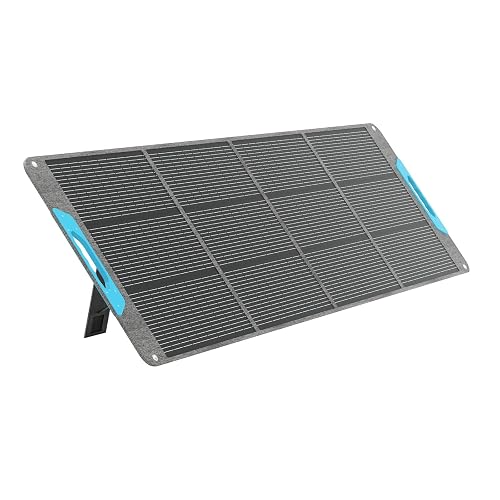 Best for kickstand setupN-Type 200 Watt Foldable Solar Panel with Kickstand, Lightweight USB-AView on Amazon
- 7
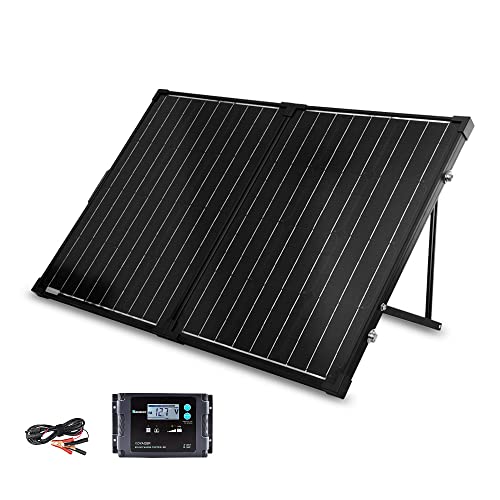 Best for small battery top-upsRenogy 100W Portable Solar Panel, 25% High Efficiency Solar Panel KitView on Amazon
Our Top Picks
Quick Comparison
| Product | Best for | Key feature |
|---|---|---|
| Renogy 200W 12V Portable Solar Panels Suitcase | Overall use | Waterproof 20A controller |
| DOKIO 200W 18V Portable Foldable Solar Panel Suitcase Kit | Lightweight carrying | 19.4 lb, USB outputs |
| ZOUPW 450W Portable Solar Panel N-Type 16BB | High output | 450W, IP68 rated |
| Renogy 200W Portable Solar Panel (N-Type Blanket) | Compact storage | Backpack-size folding design |
| DOKIO 100W Portable Foldable Solar Panel Kit | Budget-minded buyers | Folds to 19 x 26 in |
| Renogy 200W Portable Solar Panel with Kickstand | Adjustable placement | Built-in kickstand |
| Renogy 100W Portable Solar Panel Kit | Small battery top-ups | 20A charge controller |
Renogy 200W 12V Portable Solar Panels Suitcase
Renogy 200W 12V Portable Solar Panels Suitcase with Waterproof 20A Charge Controller, Foldable 200 Watt Solar Panel W/Adjustable Kickstand, Solar Charger for Power Station, RV, Camping, SUV, Off Grid If you want more background, see Solar Panel Mounting Options: Ground, Pole, Roof and Portable.
Best for: Overall use across RV, van and camping setups.
This suitcase-style kit suits RV owners who want a single panel that handles most 12V battery and power station charging. Owners often point to the included waterproof controller and adjustable kickstand as practical extras.
Pros
- Waterproof 20A charge controller included
- Adjustable kickstand for better sun angle
Cons
- Heavier than the smaller folding options
DOKIO 200W 18V Portable Foldable Solar Panel Suitcase Kit
DOKIO 200W 18V Portable Foldable Solar Panel Suitcase Kit | N-Type 16BB cells,20A waterproof controller,USB,9.85ft cable.Compact 29.6×27.6in,19.4lb.For power stations,camp,RV,off-grid
Best for: Lightweight carrying and frequent setup.
Manufacturers list this kit at about 19.4 pounds with a compact folded size, which appeals to solo travelers who set up and break down panels often. It includes a 20A waterproof controller and USB outputs.
Pros
- Listed at roughly 19.4 lb for a 200W panel
- Includes USB outputs and a 9.85 ft cable
Cons
- Output depends heavily on sun angle and shade
ZOUPW 450W Portable Solar Panel N-Type 16BB
25% Efficiency Foldable Solar Panel for EcoFlow Delta/Anker C1000/Jackery/Bluetti,IP68 Waterproof for Offgrid RV Power Backup ZOUPW 450W Portable Solar Panel N-Type 16BB for Power Station
Best for: High output for larger battery banks.
This panel is aimed at owners with bigger power stations or larger RV battery banks who want faster recharging when conditions are good. Listings describe an IP68 waterproof rating and 25% efficiency.
Pros
- 450W rated output for faster charging
- IP68 waterproof rating listed
Cons
- Bulkier and heavier to position alone
Renogy 200W Portable Solar Panel for Power Stations
N-Type 200W Solar Blanket, Backpack-Size Foldable Design Use Less Space, USB-A/Type-C Outputs for Camping, RV, SUV And Marine Renogy 200W Portable Solar Panel for Power Stations, 25% High Efficiency
Best for: Compact storage in tight RV compartments.
The blanket-style design folds into a backpack-size bundle, which suits owners short on storage. It offers USB-A and Type-C outputs for phones and small devices alongside the main power connection.
Pros
- Backpack-size folded package
- USB-A and Type-C outputs included
Cons
- Flexible blanket design can be harder to angle precisely
DOKIO 100W Portable Foldable Solar Panel Kit
Folds to 19 x 26 in and weighs 5.3 lb; includes controller and dual USB; for 12V batteries, power stations and camping. DOKIO 100W Portable Foldable Solar Panel Kit for 12V Battery Charging
Best for: Budget-minded buyers with modest power needs.
At 100W and roughly 5.3 pounds, this kit suits weekend campers who mainly keep a 12V battery topped up. Listings note the folded size of about 19 x 26 inches.
Pros
- Light at about 5.3 lb
- Includes controller and dual USB outputs
Cons
- Lower output limits how much it can power
Buying Guide
Wattage and Power Needs
Start by estimating how much energy you use each day. A 100W panel suits small loads like phone charging, lights and a fan, while 200W and up are better for running a 12V fridge, a power station or charging a larger battery bank. Higher wattage charges faster but also means a larger, heavier panel to store and move.
Portability and Weight
Since you will likely set these up and pack them away often, check the folded size and weight. Lighter suitcase-style panels with carry handles are easier to move around a campsite, while heavier models often trade portability for sturdier construction. Consider who will be handling the panel and how far it needs to travel from the RV.
Compatibility with Your Battery or Power Station
Make sure the panel’s output matches your setup. Some kits include a charge controller for 12V batteries, while others are designed to plug into a power station through a DC input or USB ports. Confirm the connector type and whether a controller is included before you buy.
Build Quality and Weather Resistance
Look for features such as waterproof ratings, tempered glass surfaces and sturdy hinges or kickstands. Panels used outdoors on RV trips face rain, dust and wind, so durable materials and secure mounting options help the panel last through many seasons of use.
FAQ
Can a portable solar panel charge my RV battery directly?
Yes, many portable panels include a charge controller that connects to a 12V battery, which protects the battery from overcharging. Check whether your chosen kit includes a controller or whether you need to add one separately. Matching the controller to your battery type is important for safe charging.
How many watts do I need to run an RV fridge?
The answer depends on the fridge’s power draw and how many hours of sun you typically get. A 200W panel is a common starting point for supporting modest loads, but heavier appliances may need more panels or a larger battery. Calculating your daily watt-hour use will give you a clearer target.
Should I park in full sun or can I use the panel in shade?
Solar panels produce the most power in direct, unobstructed sunlight, so positioning the panel to face the sun is key. Partial shade can reduce output significantly, so you may need to move the panel as the sun shifts through the day. An adjustable kickstand helps with aiming it.
Are portable panels waterproof enough for rain?
Many portable panels are rated to handle light rain and moisture, but the level of protection varies by model. Check the waterproof or IP rating listed by the manufacturer. Even with a rating, it is wise to avoid leaving the controller and connections exposed to standing water.
Do I need to clean the panel?
Dust, pollen and bird droppings can reduce how much power the panel produces. Wiping the surface with a soft cloth and clean water periodically keeps output steady. Avoid harsh chemicals or abrasive materials that could scratch the glass.
Conclusion
If you need a versatile, well-rounded panel for most RV and camping trips, a 200W suitcase-style model is a practical choice. Those who prioritize easy carrying should look at the lighter foldable kits, while buyers with large power demands may prefer a high-output panel that can support a bigger battery or power station.
For occasional weekend use or small loads, a 100W kit offers a lower-cost, simpler setup. Match the wattage, weight and compatibility to your own power needs and how often you plan to set up and pack away the panel.
Related reading
- Top 5 Small 48V Solar Panels for Off-Grid and RV Use in 2026
- Solar Panels for RV AC: 7 Best Picks for Off-Grid Cooling (2026)
- Solar Panels RV Installation: 5 Best Mounting Kits and Panels (2026)
About Ethan Brooks
Ethan Brooks is part of our editorial team and reviews and edits our small-scale solar guides, checking product details against manufacturer specifications and owner feedback.