 By Claire Whitaker
Updated November 2026
Choosing an rv solar powered air conditioner comes down to voltage, cooling capacity, and how much power your battery bank and solar array can realistically supply. This list compares six 12V and 24V rooftop units with DC-style operation, which pair well with off-grid setups. We focused on BTU rating, heater option, noise level, power draw, and how well each unit fits typical RV, van, and truck roof openings.
Our top picks at a glance
- 1
 TOP CHOICEBest overallRV Air Conditioner 12V 11000 BTU Black Interior BoxView on Amazon
- 2
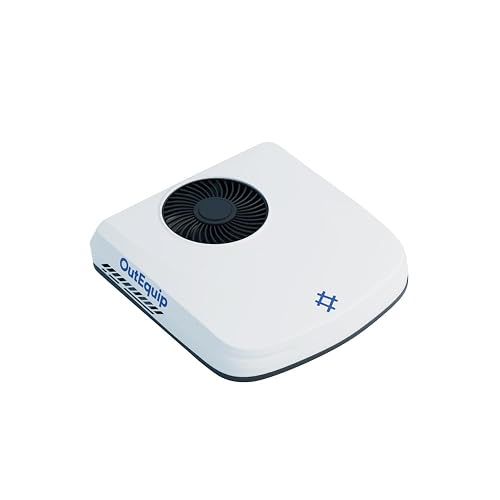 TOP CHOICEBest for compact vansRV Air Conditioner 12V 10000 BTU Low Profile (w/heater)View on Amazon
- 3TOP CHOICEBest for heating and coolingOutequip RV Air Conditioner 12V 10000 BTUView on Amazon
- 4
 Best for heat pump operationEROMMY RV Air Conditioner with Heat Pump 10000 BTUView on Amazon
- 5
 Best for quiet sleeping12V RV Rooftop Air Conditioner with Heater 10,000 BTUView on Amazon
- 6
 Best for 24V battery banks24V RV Air Conditioner 12500 BTU With HeaterView on Amazon
Our Top Picks
| Product | Best for | Key feature |
|---|---|---|
| RV Air Conditioner 12V 11000 BTU Black Interior Box | Off-grid van and truck builds | 11000 BTU DC cooling |
| RV Air Conditioner 12V 10000 BTU Low Profile (w/heater) | Compact vans and campers | Low profile with heater |
| Outequip RV Air Conditioner 12V 10000 BTU | Simple cooling-only setups | Low-profile 12V design |
| EROMMY RV Air Conditioner with Heat Pump | Mild climates needing heat too | Heat pump, auto swing airflow |
| 12V RV Rooftop Air Conditioner with Heater | Quiet overnight comfort | Sleek low-noise housing |
| 24V RV Air Conditioner 12500 BTU With Heater | Larger 24V battery systems | 12500 BTU, 40dB operation |
RV Air Conditioner 12V 11000 BTU Black Interior Box
12V 11000 BTU RV Rooftop Air Conditioner, Quiet DC AC Unit for Off-Grid Van Camper Truck, Black Interior Box
Best for: Off-grid van and truck builds needing strong cooling.
This unit suits owners with a solid battery bank who want the highest cooling capacity in a 12V DC package.
Pros:
- Higher 11000 BTU rating for hot days
- Designed for off-grid DC operation
Cons:
- Draws significant current, so battery sizing matters
RV Air Conditioner 12V 10000 BTU Low Profile (w/heater)
RV Air Conditioner, 12V 10000 BTU Rooftop Air Conditioner for RVs, Trucks, Vans, Campers, Tractor, Low Profile Quiet AC Unit(w/heater)
Best for: Compact vans and campers with limited roof clearance.
Ideal for owners who want cooling and a heater in one low-profile unit without a tall roof footprint.
Pros:
- Low profile fits tight roof space
- Includes heater for cool nights
Cons:
- 10000 BTU may feel modest in very hot conditions
Outequip RV Air Conditioner 12V 10000 BTU
Outequip RV Air Conditioner, 12V 10000 BTU Rooftop Air Conditioner for RVs, Trucks, Vans, Campers, Tractor, Low Profile Quiet AC Unit, OutEquipPro 12V AC (12 voltage w/o heater)
Best for: Heating and cooling setups where a heater is not needed.
A good fit for owners in warm climates who only need cooling and want a straightforward 12V rooftop unit.
Pros:
- Low-profile 12V rooftop design
- Works with common RV and van roof openings
Cons:
- No heater included in this version
EROMMY RV Air Conditioner with Heat Pump 10000 BTU
EROMMY RV Air Conditioner with Heat Pump, 10000 BTU RV AC Unit with Auto Swing Airflow, Low Power Consumption, Ultra Quiet, Non-Ducted RV Air Conditioners for RVs, Trucks, and Campers
Best for: Mild climates where both cooling and heat pump operation are useful.
Suited to travelers who spend shoulder seasons in changing temperatures and want one unit for both modes.
Pros:
- Heat pump operation for cool-weather use
- Auto swing airflow spreads air evenly
Cons:
- Heat pump efficiency drops in very cold weather
12V RV Rooftop Air Conditioner with Heater 10,000 BTU
12V RV Rooftop Air Conditioner with Heater, 10,000 BTU Low Profile DC AC Unit – Quiet Cooling for Camper, Van, Truck, Trailer, Boat – Sleek Black Housing
Best for: Quiet overnight comfort in vans, trailers, and boats.
Fits owners who sleep in their rig and want a low-profile unit with a heater option and a sleek housing.
Pros:
- Low-profile housing for a clean roof look
- Heater option for shoulder seasons
Cons:
- Owners report it works best with a well-sized battery bank
24V RV Air Conditioner 12500 BTU With Heater
24V RV Air Conditioner 12500 BTU With Heater, DC Rooftop AC Unit for Camper Van, 40dB Off-Grid Battery Powered RV AC Unit
Best for: Larger 24V battery systems that need more cooling capacity.
Designed for builds running a 24V DC system, where the higher voltage reduces current draw compared with 12V units.
Pros:
- 12500 BTU for larger spaces
- Listed noise level around 40dB
Cons:
- Requires a 24V system, so it is not a drop-in for 12V rigs
Buying Guide
Voltage and Battery Compatibility
Match the unit’s voltage to your battery bank before anything else. 12V units suit most small campers and vans with a standard 12V house system, while 24V models are designed for larger setups and can draw less current for the same cooling output. Confirm that your battery bank and inverter (if used) can handle the startup and running load.
Cooling Capacity (BTU)
BTU rating indicates how much heat the unit can remove per hour. Smaller spaces such as a compact camper may be comfortable with a lower BTU rating, while larger trailers, box trucks, or full-size vans often benefit from more capacity. Oversizing is generally less of a concern than undersizing, but a larger unit will also demand more power.
Heater Option and Climate Needs
Some models include a built-in heater or a heat pump function, which can be useful if you camp in shoulder seasons or cooler climates. If you only expect hot weather, a cooling-only unit may be simpler and sometimes lighter. Check whether the heater is electric resistance or heat pump, since that affects power draw.
Noise Level and Power Consumption
Noise ratings matter if you plan to sleep with the unit running or camp in quiet areas. Lower decibel ratings generally mean a more comfortable night, and efficient DC compressors help keep the power draw manageable on a solar budget. Compare the stated power consumption against your solar panel wattage and battery capacity to estimate how many hours of runtime you can expect.
Roof Fit and Installation
Measure your roof opening and check the unit’s dimensions and mounting footprint before buying. Low-profile designs reduce wind resistance and clearance issues, which is helpful on vans and campers with limited roof height. Also confirm the included ceiling unit, wiring, and any sealing or mounting hardware you will need.
FAQ
Can a solar panel setup run a rooftop RV air conditioner?
Yes, but it depends on the unit’s power draw, your battery capacity, and how much sun you get. Solar panels usually recharge batteries rather than powering the AC directly, so the system is typically sized around daily energy use. Planning carefully helps avoid running the battery down too far.
Is a 12V or 24V unit better for off-grid camping?
Neither is universally better, since the right choice depends on your existing electrical system. 12V units fit common small RV and van setups, while 24V units can be more efficient for larger battery banks. Match the voltage to what your system already uses.
How many BTUs do I need for my RV?
Required BTUs depend on the size of the space, insulation, sun exposure, and the outside temperature you expect. Smaller campers generally need less cooling capacity than larger trailers or box-style campers. When in doubt, consult the manufacturer’s guidance for your interior volume.
Do these units work on trucks and boats too?
Several of these units are marketed for trucks, trailers, and boats in addition to RVs and campers. Check the specific product description and mounting requirements, since roof structure and wiring may differ. Confirm compatibility before purchasing for a non-RV application.
Does a heater option use a lot of extra power?
Heating functions can draw significant power, especially electric resistance heaters, so they should be planned with your battery and solar capacity in mind. Heat pump modes are generally more efficient but may perform less well in very cold weather. Running the heater during the day when solar output is strongest can help manage the load.
Conclusion
For small campers and vans on a standard 12V system, the 12V models with moderate BTU ratings and low-profile designs are a practical fit, especially if you want a heater option for cooler nights. Larger rigs or those with bigger battery banks may find the 24V unit with higher capacity and lower noise better suited to extended off-grid stays.
If you mainly need reliable cooling on a tighter power budget, prioritize efficiency and roof fit, while buyers who expect mixed seasons should weigh the heating function alongside their solar and battery capacity.
Related reading
- Solar Powered RV Air Conditioning: What Actually Works in 2026
- 7 Best Solar Panel RV Air Conditioner Options for Off-Grid Camping (2026)
- 4 Best RV Air Conditioner on Solar Options for Off-Grid Camping (2026)
About Claire Whitaker
Claire Whitaker is part of our editorial team and reviews and edits our small-scale solar guides, checking product details against manufacturer specifications and owner feedback.


