 By Claire Whitaker
Updated November 2026
Solar generators for RV owners solve a simple problem: keeping lights, phone chargers, a fridge, and maybe a CPAP or roof fan running without idling a noisy engine. This list compares six portable power stations and bundled solar panel kits, weighing battery capacity (watt-hours), continuous AC output, solar input, and how well each handles RV-style outlets and charging. Owner feedback patterns and manufacturer specifications were the basis for the picks. 7 Best Solar Powered RV Generator Picks for Off-Grid Camping goes further into this.
Our top picks at a glance
- 1
 TOP CHOICEBest overallJackery Solar Generator 1000 v2 and 200W Solar PanelView on Amazon
- 2
 TOP CHOICEBest for small loadsJackery Solar Generator 300 and 40W Solar PanelView on Amazon
- 3
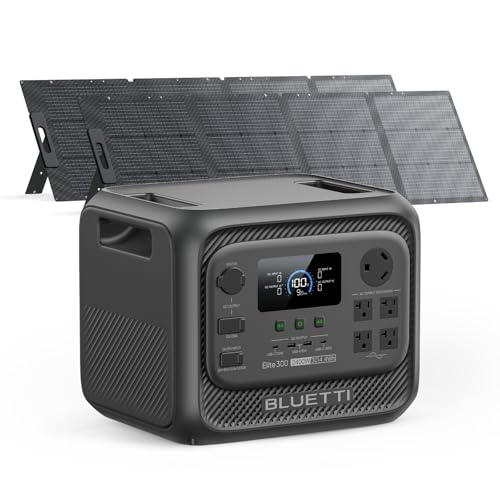 TOP CHOICEBest for a full RV setupBLUETTI Solar Generator Elite 300 and 2x200W Solar PanelsView on Amazon
- 4
 Best for heavy home backupJackery HomePower 3600 Plus Power StationView on Amazon
- 5
 Best for high surge loadsJackery HomePower 3000 and 2x200W Solar PanelsView on Amazon
- 6
 Best for budget solar chargingJackery Solar Generator 1000 v2 and 100W Solar PanelView on Amazon
Our Top Picks
Quick Comparison
| Product | Best for | Key feature |
|---|---|---|
| Jackery Solar Generator 1000 v2 and 200W Solar Panel | Overall RV use | 1024Wh LiFePO4, 1500W AC |
| Jackery HomePower 3000 and 2x200W Solar Panels | High surge loads | 3072Wh, 7200W surge |
| Jackery HomePower 3600 Plus Power Station | Heavy home backup | Expandable to 21kWh |
| Jackery Solar Generator 300 and 40W Solar Panel | Small loads | 292Wh, pure sine wave |
| BLUETTI Solar Generator Elite 300 and 2x200W Solar Panels | Full RV setups | 3014Wh, TT-30 RV port |
| Jackery Solar Generator 1000 v2 and 100W Solar Panel | Budget solar charging | 50-minute fast charge |
Jackery Solar Generator 1000 v2 and 200W Solar Panel
Jackery Solar Generator 1000 v2 and 200W Solar Panel,1024Wh LiFePO4 Battery | 1500W (3000W Peak), 50-Min Fast Charge, 10ms UPS Solar Generator for Home Emergency, Camping & RV
Best for: Overall RV use
A strong middle option for weekend campers who want lights, laptops, a small fridge, and phone charging without running a generator.
- Pros: 1024Wh LiFePO4 battery; 50-minute fast charge from wall power
- Pros: 1500W continuous AC output covers most camper appliances
- Cons: Panel wattage limits how fast it recharges in cloudy weather
Jackery HomePower 3000 and 2x200W Solar Panels
Jackery HomePower 3000 and 2x200W Solar Panels, 3072Wh, 3600W AC Output | 7200W Surge, LFP Battery, Solar Generator, Essential Backup for Home Use, Power Outage, RV, Emergencies
Best for: High surge loads
Suited to RVs running air conditioners or power tools, where startup surges can trip smaller units.
- Pros: 7200W surge rating handles motor startup loads
- Pros: 3072Wh capacity supports multi-day off-grid stays
- Cons: Heavier and bulkier than compact units
Jackery HomePower 3600 Plus Power Station
LFP Battery, Expandable to 21kWh, Solar Generator, Essential Home Backup for Home Use, Emergencies, RV (Solar Panel Optional) Jackery HomePower 3600 Plus Power Station, 3584Wh, 3600W AC Output
Best for: Heavy home backup
Best for owners who want RV-grade power that doubles as home emergency backup, with room to expand storage over time.
- Pros: Expandable up to 21kWh with additional battery modules
- Pros: 3600W continuous AC output for large appliances
- Cons: Solar panels are sold separately, adding setup cost
Jackery Solar Generator 300 and 40W Solar Panel
Jackery Solar Generator 300 and 40W Solar Panel,292Wh,300W AC | Pure Sine Wave AC Outlet, for RV, Outdoors, Camping, Travel, Blackout
Best for: Small loads
A compact choice for campers who mostly need to charge phones, run LED lights, and power a small fan or laptop.
- Pros: Pure sine wave output is gentle on sensitive electronics
- Pros: 292Wh capacity is light enough to move easily
- Cons: Too small for refrigerators or air conditioners
BLUETTI Solar Generator Elite 300 and 2x200W Solar Panels
BLUETTI Solar Generator Elite 300 & 2x200W Solar Panel 3014.4Wh LFP Battery | w/ 2400W AC Outlets (4800W Surge), Smallest 3kWh, Portable Power Station for RV, Home Backup, w/ TT-30 RV Port & 12V/30A D
Best for: Full RV setups
Fits owners who want a TT-30 RV port and 12V/30A DC output alongside standard AC outlets for a more complete camper install.
- Pros: 2400W AC outlets with 4800W surge capacity
- Pros: Built-in TT-30 RV port and 12V/30A DC output
- Cons: Higher weight makes it harder to relocate by hand
Jackery Solar Generator 1000 v2 and 100W Solar Panel
LiFePO4 Battery, 50-Min Fast Charge, 10ms UPS Solar Generator for Home Emergency, Camping & RV Jackery Solar Generator 1000 v2 and 100W Solar Panel,1024Wh,1500W AC
Best for: Budget solar charging
A budget-minded pick for campers who want the same 1024Wh battery as the top pick but with a smaller, lower-output panel.
- Pros: Same 1024Wh LiFePO4 battery and 1500W AC output
- Pros: 50-minute fast charge from wall power
- Cons: 100W panel recharges noticeably slower than 200W setups
Buying Guide
Battery capacity (watt-hours)
Add up the wattage of what you run and how many hours you need it. A 1000Wh battery can run a 50W device for roughly 20 hours before losses, so size up if you plan extended boondocking.
FAQ
How many watt-hours do I need to run an RV fridge overnight?
Most RV compressor fridges draw a modest amount of power on average, but they cycle on and off, so the real total depends on the model, ambient temperature, and how often the door opens. A battery with a few thousand watt-hours of capacity is often enough to cover a fridge plus lights and device charging through a night. Check your fridge’s rated consumption in its manual to make a more accurate estimate.
Can a solar generator run my RV air conditioner?
Running a full RV air conditioner typically requires substantial continuous output and a large battery, and many portable units are better suited to fans, fridges, lights, and electronics. Some of the larger models in this list have enough output to start smaller AC units, but you should confirm the surge and running wattage against the unit’s label. Pairing a generator with a soft-start kit can also help.
How long does it take to recharge a solar generator with solar panels?
Charging time depends on the total solar input wattage, the amount of sunshine, and the battery size. Panels rated at 200W or more can recharge a mid-size battery in a day of good sun, while smaller panels take longer. Cloudy weather or partial shade will extend the time considerably.
Is a LiFePO4 battery better for RV use than other lithium types?
LiFePO4 (LFP) batteries are generally favored for RV and off-grid use because they tolerate many more charge cycles and are more stable under heat. They also tend to hold up well over years of regular use. The tradeoff is that they are often heavier for a given capacity.
Can I plug a solar generator into my RV’s outlet or hookup?
Some models include RV-friendly ports such as a TT-30 connector or a 12V DC output, which can make it easier to power RV circuits. Before connecting, make sure the generator’s output matches what your RV circuits expect and avoid backfeeding into shore power. A transfer switch or adapter may be needed for a clean connection.
Do solar generators work well in cold weather?
Lithium batteries generally should not be charged below freezing, and performance drops in cold conditions even when discharging. Many units include battery management features that limit charging in low temperatures. If you camp in winter, store the unit inside your RV and keep it insulated where possible.
Conclusion
For most RV owners who want a balanced mix of capacity, solar input, and everyday outlets, the mid-range Jackery and BLUETTI setups offer the most flexibility. Those running heavier loads such as an air conditioner or planning long off-grid stays should look at the larger HomePower models and their expandable battery options.
If you mostly need to power phones, lights, a small fan, or a CPAP on short trips, the smaller units are a practical and lighter choice. Match the watt-hour capacity to your nightly load, and add solar panels that can recharge the battery within a day of typical sunshine on your travels.
Related reading
- Solar Inverter Generator for RV vs Solar Panels: Which Should You Choose?
- Best RV Solar Generator: How to Choose the Right One for Your Rig (2026)
- 50 Amp Solar Generator for RV: How to Choose and Set It Up (2026)
About Claire Whitaker
Claire Whitaker is part of our editorial team and reviews and edits our small-scale solar guides, checking product details against manufacturer specifications and owner feedback.


